
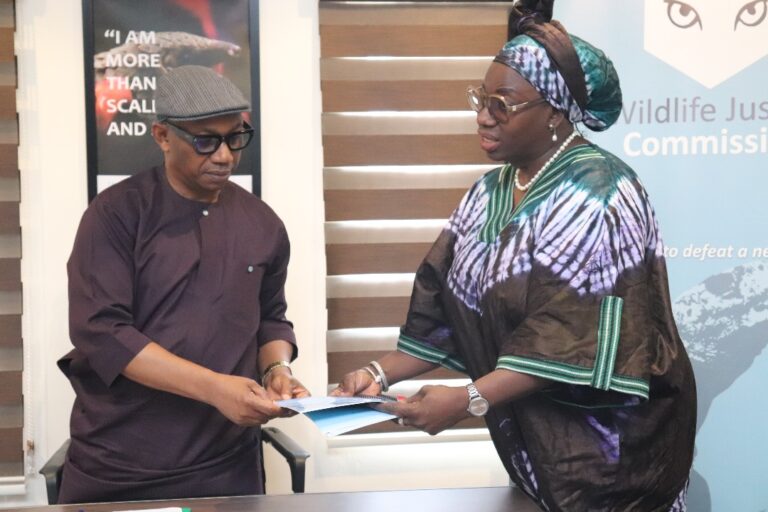
The National Environmental Standards and Regulations Enforcement Agency has entered into an agreement with the Wildlife Justice Commission to improve wildlife protection and tackle organised trafficking in Nigeria.
The partnership was sealed on Tuesday at the agency’s headquarters in Abuja. The Director-General of NESREA, Prof. Innocent Barikor, signed on behalf of the agency, while Stephen Carmody, Chief of Investigations at the WJC, was represented by Abim Isafiade, the Regional Manager for West and Central Africa.
The new Memorandum of Understanding is designed to boost intelligence-sharing, legal and forensic cooperation, and future joint operations under the Nigerian Wildlife Law Enforcement Task Force. Both organisations pledged to work together to disrupt wildlife crime, dismantle criminal networks, and protect species that are under threat of extinction.
This step comes months after the House of Representatives passed the Endangered Species Conservation and Protection Bill, 2024, which aims to address trafficking and provide stronger safeguards for endangered animals.
Nigeria has been identified by the United Nations Office on Drugs and Crime as a major transit hub for the illegal wildlife trade. The country plays a central role in the trafficking of pangolins, ivory, rosewood, and other forest products, according to a 2023 assessment.
Speaking at the signing, Prof. Barikor said the collaboration reflects Nigeria’s commitment to international treaties on endangered species and the protection of biodiversity. He explained that the agreement would help ensure the country does not remain a safe passage for traffickers, while also supporting sustainable wildlife conservation.
The Executive Director of the Wildlife Justice Commission, Olivia Swaak-Goldman, noted that the cooperation with NESREA would strengthen enforcement efforts in Nigeria. She explained that by involving the Nigerian Wildlife Law Enforcement Task Force, the partnership would reinforce intelligence-driven operations and further build the country’s capacity to fight wildlife crime.
The agreement marks another step in Nigeria’s efforts to close gaps in wildlife enforcement and reduce the impact of organised trafficking on the environment.