
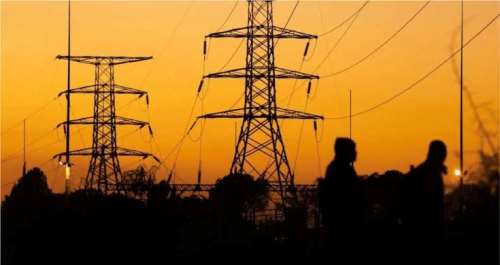
Nigerians In Darkness As Power Grid Collapses Again
….TCN Says Its Partial
By SUNDAY ABBA, Abuja
Most parts Nigeria were thrown into darkness on Monday evening as the national electricity grid broke down again.
SUMMIT POST learnt that the grid collapsed around 6:58 p.m. on Monday, resulting in a very significant dip in bulk power supply to the distribution companies (DisCos) load centres.
It is about the sixth time in 2024 that consumers will experience power outages occasioned by incidents from the grid.
Confirming the collapse, the Abuja Electricity Distribution Company (AEDC), in a statement posted on its X handle, said: “Dear valued customer, please be informed that the power outage being experienced is due to a system failure from the national grid at 6:58 p.m. today, affecting the power supply to our franchise areas.
“Rest assured, we are working with the relevant stakeholders to restore power as soon as the grid is stabilised. Thank you for your understanding,” the statement said.
In the same vein, Enugu Electricity Distribution Company PLC (EEDC), Eko Electricity Distribution Company (EKEDP) put out notice, confirming that they were not getting supply from the grid as a result of the incident, and promising to resume as soon as the supply was restored.
However, the Transmission Company of Nigeria (TCN) has said that Monday’s national grid collapse was partial, noting that it has begun system recovery to restore supply.
The company’s spokesperson, Ndidi Mbah, who disclosed this in a chat with DAILY POST on Monday said, “It was a partial system disturbance.”
“The entire system did not collapse as the IBOM Generating Station was islanded (i.e. separated to stand alone to continue supplying some areas to avoid the entire system going down), to enable it to continue to supply through the eket, Ekim, Uyo, and Itu 132kv substations.
“Recovery is currently ongoing and has advanced significantly.
In recent years, the power sector has experienced many challenges in areas of electricity policy enforcement, regulatory uncertainty, gas supply, transmission system constraints, and significant power sector planning shortfalls.
In November 2013, the federal government privatised all power generation and 11 distribution companies, with the government retaining the ownership of the transmission company. This was to improve efficiency in the sector.
However, since privatisation, the grid has continued to collapse from time to time amid efforts to reposition the power sector.