
By SUNDAY ABBA, Abuja
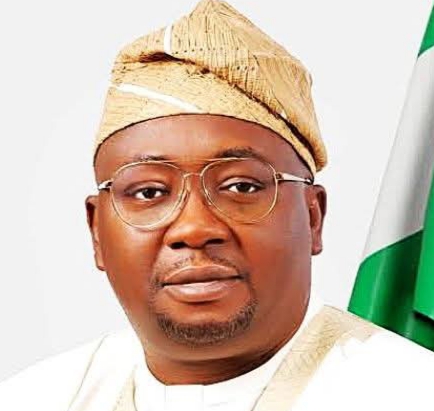
Minister of Power Adebayo Adelabu has disclosed that Nigeria’s electricity market revenue in increased by ₦700 billion in revenue, reflecting a 70% increase.
The minister made the disclosure at the opening ceremony of the 2025 and 4th African Natural Resources and Energy Investment Summit (AFNIS) holding at the Banquet Hall of the Presidential Villa on Wednesday in Abuja with the theme of this year’s summit, which is the fourth edition, is “Harnessing Local Content for Sustainable Development”.
He noted that the Electricity Act of 2023 has decentralised electricity governance, as a result of which eleven states had already assumed regulatory control over their sub-national markets, unlocking investment and competition.
“This reform enables each state to tailor energy solutions to local needs, while still contributing to national and regional market stability.
“We have developed and presented two foundational planning documents: the National Integrated Electricity Policy (NIEP) and the Integrated Resource Plan (IRP). These frameworks now guide power sector planning, prioritising least-cost solutions, optimal resource use, and clear investment pathways,” Adelabu said.
According to the power industry overseer, The theme “Harnessing Local Content for Sustainable Development” speaks directly to the current Federal Ministry of Power priorities.
He said as global trends shift toward decentralisation, digitisation, and decarbonisation, Nigeria is working to ensure that local content does not remain a policy slogan but becomes a measurable lever for economic growth, industrial capacity, and energy security.
He said, “With a population exceeding 200 million, Nigeria’s electricity demand continues to rise. Meeting that demand requires more than generation. It requires a clear regulatory framework, sustained investment, and local participation at every value chain level, from metering and manufacturing to system operations and grid management.
“Under the Renewed Hope Agenda of President Bola Ahmed Tinubu, we are strengthening domestic capabilities across the sector. We are driving reform to reduce import dependence, close infrastructure gaps, and embed local skills and technology into the core of our power strategy.
“We have developed and presented two foundational planning documents: the National Integrated Electricity Policy (NIEP) and the Integrated Resource Plan (IRP). These frameworks now guide power sector planning, prioritising least-cost solutions, optimal resource use, and clear investment pathways.
“Furthermore, it is evident that, due to our transformative tariff reforms, the market has generated an additional ₦700 billion in revenue, reflecting a 70% increase. This results from the cost-reflective tariff adjustment for Band A customers. Market revenue for 2024 rose from NGN 1 trillion in 2023 to NGN 1.7 trillion.
“This growth in market revenue is unprecedented, as the highest growth previously achieved was 20%. This positively impacts the reduction of the government subsidised tariff shortfall by 35%, reducing it from NGN 3 trillion to NGN 1.9 trillion and demonstrating that financial viability and service delivery can coexist harmoniously.”
In line with AFNIS 2025 theme, the minister said local content is being receiving premium attention through investment and execution.
He said, “We are using energy access and energy transition to drive domestic production, technology transfer, and employment: The Energising Education Programme (EEP) is adding 100MW of clean energy across 37 federal universities and 7 teaching hospitals. EEP III is now 70% complete.
“The DARES project, backed by a $750 million World Bank facility, targets over 17.5 million Nigerians through decentralised, private sector-led electrification with productive-use applications for SMEs and agriculture.
Through the Africa Mini-Grid Programme, we’ve secured $5.91 million in grants across 23 projects, delivering 948MW of new renewable capacity in partnership with 10 RESCOs.
“New meter test stations in Kano and Benin are nearing commissioning. These facilities will ensure quality assurance for meters assembled or produced locally—raising consumer trust and protecting investor capital.
“We are working closely with the Solar Energy Manufacturers Alliance of Nigeria to expand domestic assembly lines and deepen localisation in solar infrastructure.”
In terms of scaling regional integration and market opportunities, the minister expressed Nigeria’s commitment to partner in the Dar es Salaam Declaration and to be an active contributor to Mission 300, adding, “We remain focused on universal energy access and a credible path to net-zero emissions by 2060.”
“We are strengthening cross-border transmission through the West African Power Pool, expanding links to Benin, Niger, Togo, and Ghana. We are also participating in the ECOWAS Regional Electricity Market, which presents significant opportunities for Nigeria’s generation capacity and grid infrastructure.
Concluding, he stressed that local content must be measurable, translate to jobs, supply chains, technical skills, and retained value, saying Nigeria’s power sector reform is not about theory but execution.
“Our progress so far reflects a serious commitment to doing the hard work required to deliver a sustainable, investable, and resilient power sector.
“We are ready to partner with governments, private investors, and development institutions on projects that deliver results, respect local capability, and scale with impact.”