
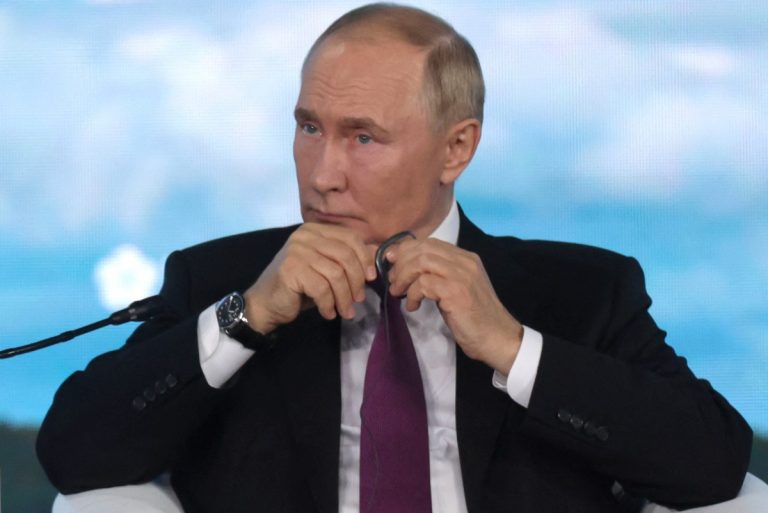
Russian President Vladimir Putin has declined to commit to a deadline for peace talks with Ukraine, casting uncertainty over U.S. President Donald Trump’s recent claims that negotiations would begin “immediately.”
Despite a two-hour phone conversation between the two leaders, the Kremlin remains cautious and says the process of building a ceasefire deal will be long and complicated.
Putin’s spokesperson, Dmitry Peskov, stated on Tuesday that Moscow is not setting any timeline for the development of a peace agreement. While both Russia and Ukraine may soon begin drafting their own proposals, creating a single, unified text will take time and involve difficult negotiations. “There are no deadlines, and there cannot be any,” Peskov told reporters, underlining the complexity of the task ahead.
Trump had earlier described his call with Putin as “excellent” and suggested that peace talks were on the verge of starting. However, the Kremlin’s response showed a clear disconnect between the American president’s optimism and the Russian government’s more measured stance. According to Moscow, any steps toward peace will need careful negotiation, document exchange, and coordination between multiple parties.
On the battlefield, Ukraine continues to report intense fighting. The country’s military claimed on Tuesday that it inflicted over 1,000 casualties on Russian forces within a 24-hour period. More than 170 combat clashes were reported, especially near Pokrovsk in Donetsk, where the front line has been the scene of some of the war’s most intense fighting. Russia launched dozens of airstrikes and thousands of artillery shells as both sides remain locked in a brutal conflict.
Meanwhile, Ukrainian President Volodymyr Zelensky emphasized the importance of U.S. involvement in the peace process. After holding his own conversation with Trump, Zelensky warned that any U.S. withdrawal from negotiations would only serve Russia’s interests. He urged continued engagement from America and its allies, suggesting a high-level summit involving Ukraine, Russia, the U.S., the EU, and the UK could be a next step toward ending the war.
Although Moscow has not walked away from talks altogether, its refusal to set a timeline adds a layer of uncertainty to the peace process. With both sides still trading heavy blows on the front lines, and with major differences to resolve at the negotiating table, a swift end to the war remains unlikely. As the world watches, the path to peace remains steep, uncertain, and deeply contested.