
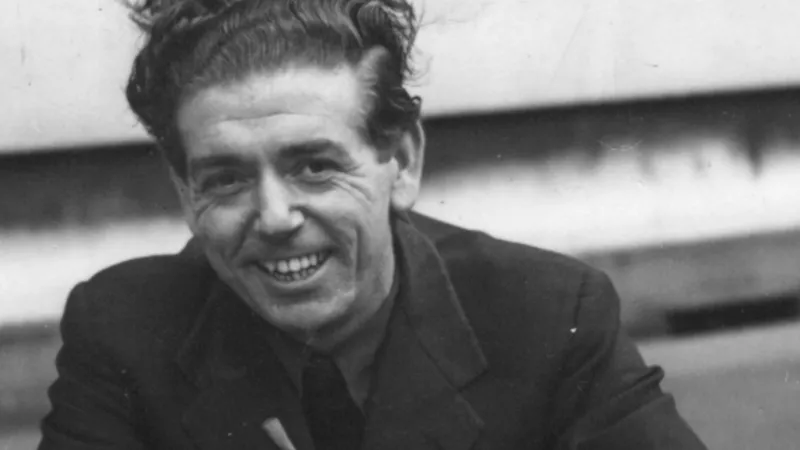
In the heart of a quiet Nottinghamshire village during World War Two, locals once suspected a mysterious Spanish artist of espionage.
Decades later, his story is being rediscovered and celebrated through a new documentary.
Mario Armengol arrived in Laneham in the 1940s, having already lived through the horrors of the Spanish Civil War. Born in Catalonia in 1909, his anti-fascist political views placed him on a list of “undesirables” in Francoist Spain. Forced to flee, he crossed into France, was arrested, and eventually ended up in the French Foreign Legion before being transferred to Britain in 1940.
Villagers had never seen anyone like Armengol. With his heavy accent, signature beret, and strange habit of mailing large packages each week, he quickly became the subject of rumors. Some believed he was a spy. The truth was far more surprising — he was working for the British Ministry of Information, drawing thousands of satirical cartoons mocking Hitler and the Nazi regime.
Armengol’s drawings were powerful tools of wartime propaganda. His cartoons depicted Hitler as foolish, dangerous, and doomed, often styled in exaggerated or humorous ways to rally support and weaken enemy morale. His work was published far beyond the UK — reaching audiences in the Americas and Europe, including underground resistance movements in occupied countries.
Despite initial suspicion, Armengol eventually won over the community. He entertained children, charmed neighbors, and became a well-liked figure in the village. Locals who once eyed him with doubt came to admire his charisma and creative energy. One resident, Lindah Kiddey, recalls how he transformed from outsider to local legend.
Kiddey’s mother, Rolindez De Madariaga, met Armengol at her family’s Spanish restaurant in Liverpool. The two formed a deep bond, remaining close for decades, even though both married others. They eventually lived together in Nottinghamshire and are buried side by side in Radcliffe-on-Trent.
Now, nearly a century later, two Spanish journalists are creating a documentary to share Armengol’s life and work with the world. Alongside exhibitions in Spain, the film is expected to be released in 2026, aiming to bring his art and legacy to new audiences.
Many of his wartime pieces still survive, showing sharp wit and bold imagery. They serve as a reminder of the role creativity played in global resistance efforts — and of how one misunderstood artist became an unlikely wartime hero in a small English village.