
NSA Tasks Stakeholders On Civil Protection, Justice, Accountability, IEDs
By ABAH ADAH, Abuja
Nigeria’s National Security Advisor (NSA) Nuhu Ribadu, has charged the military, law enforcement agencies, legal authorities, human rights and civil society organisations among others to prioritise strong civil-military-law-enforcement-agencies cooperation, civil protection, accountability, Justice, and a unified approach in countering improvised explosives.
Ribadu gave the charge in his welcome address at the the opening ceremony of a 2-day Security and Justice Symposium themed, ”Securing Peace, Ensuring Justice, Protection, Conduct and Accountability” organised by the Office of the National Security Adviser (ONSA) in collaboration with the British High Commission at the National Counter Terrorism Centre (NCTC) of the office, on Tuesday in Abuja.
He said, “Our objective today is clear, to delve into the successes, challenges and opportunities for growth within the realms of security and justice.
“As we embark on this journey of critical, analysis and discussion, let us keep in mind the nobel goal before us, from analyzing and strengthening the intricate relationship between military operations and law enforcement, to enhancing the protection of civilians, and fostering a culture of justice and accountability to promoting a unified approach in countering improvised explosives, each objective is poised to make a significant impact.
Thanking the leadership of the Nigerian military, judiciary, police and other stakeholders, the NSA said, “Your presence here today underscores the importance of our shared commitment to security, justice and the well being of our communities. Your expertise and dedication. Are invaluable as we navigate the challenges ahead together.”
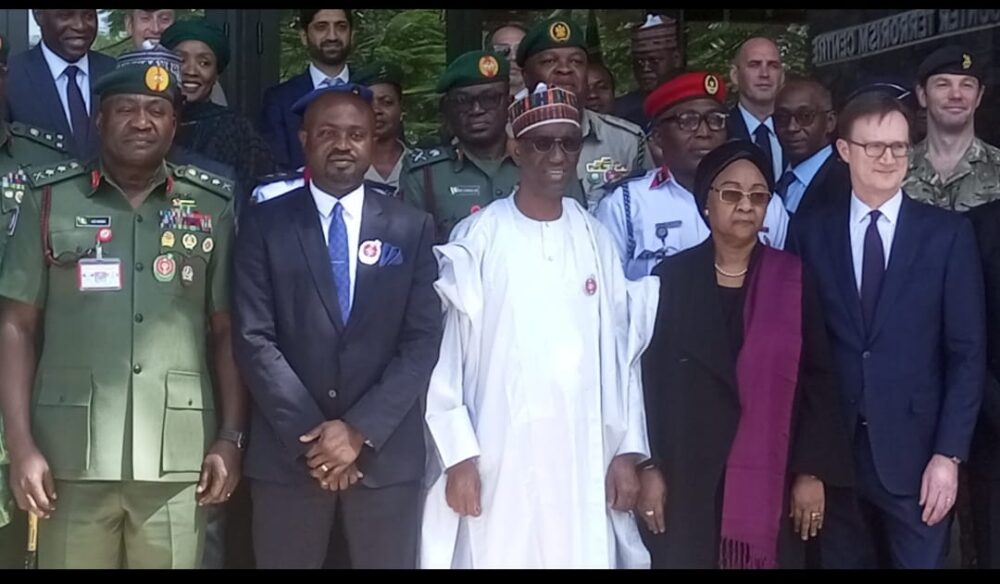
In his remarks, the Chief of Defence Staff (CDS), General Christopher Musa, who thanked the NSA and the Coordinator, NCTC, Maj. Gen. Adamu Laka, stressed that securing enduring peace and security requires that fairness, equity, and justice be upheld even as other avenues are being explored.
“There will not be peace if there’s no fairness, equity and justice anywhere in any society. So I’m happy discussions here will bring out the relevance of these issues. Nigeria is going through so many challenges, and we feel to be able to address them, everybody must have a sense of belonging,” he said.
Identifying securing peace, ensuring justice, protection, good conduct, and accountability as challenges being faced, the general disclosed that a major challenge now remains how to handle the menace of Improvised Explosive Devices (IEDs).
He equally disclosed that cutting off logistics sources and informants of terrorists is one approach being adopted by the Nigerian military based on lesson learnt, which has yielded positive results in the counter-terrorism campaign in hotspot areas such as the North East.
He noted that, since no nation could succeed in isolation, partnership with Nigeria’s neighbours who are Francophone, had also been stepped up in containing violent crimes.
Declaring the symposium open, the British High Commissioner to Nigeria, Richard Montgomery, express delight that significant progress was being witnessed in the security cum defence cooperation on counter-terrorism between the UK and Nigeria, initiated some years ago, but renewed under the NSA’s leadership earlier in February, adding that the programme was a continuation of the dialogue.
According to him, “At the heart of all this is recognition of the importance of upholding the rule of law, human rights, international humanitarian laws in the way we tackle the security challenges”.
In his keynote address, Chief Judge of the Federal High Court Abuja, Justice Husseini Baba-Yusuf, who was represented by Justice Binta Nyako, stressed the need for high level of diligence and accountability on the part of the officers and men of the security agencies involved in the fight against terrorism to guide against having unnecessary civilian casualties.
“I think we need to look at accountability for war crimes and great violations of human rights. It is essentially not for only for justice; it is for everybody.
We need to be accountable for infractions of human rights, even in the course of war. There are fundamentals that have to be observed in the protection of human rights. We can’t just say because there is war, we now go and clear a whole of my village and kill everybody, it’s not everybody that is a criminal.
He emphasised the need for the agencies to first secure the confidence of the people by observing the fundamental human rights approaches to make them feel safe in sharing intelligence about the criminals, who according to him live among the people.
“Sometimes I remember when we first started with the community trials, some people, most people, will admit to knowing or knowledge of activities of the criminals and did not report to security agencies.
“Why is this so? Because some of these insurgents are their relatives, living in their homes. And there is this fear that if they did report to security agencies, there may be a sort of reprisal attack on them, so nobody reported.
“But if they had confidence that they’re going to be secured, then they will be able to tell to the security agents. Otherwise, nobody will ever come out,” he said, stressing the need to operate in line with the Criminal Justice Act that makes provisions for reintegration, which he noted is also captured in the Terrorism Act.