
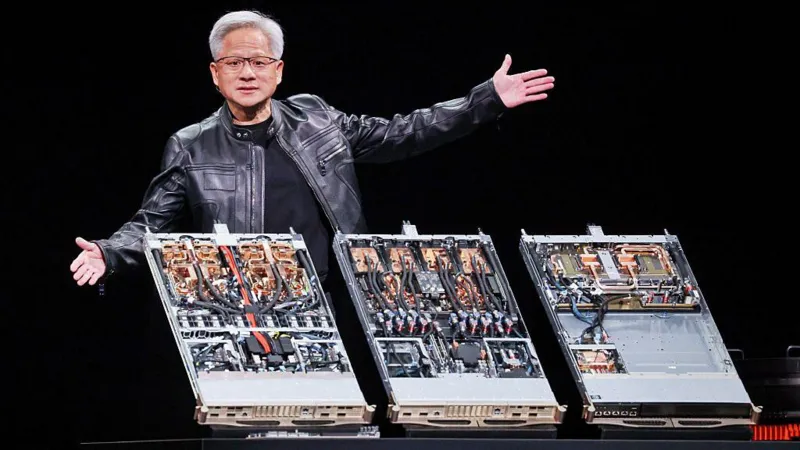
Nvidia CEO Jensen Huang has criticized US chip export restrictions, calling them a failure during a press conference at the Computex tech event in Taipei.
Huang said the policy meant to limit China’s access to advanced chips has instead hurt American companies, including his own, while giving China more reason to speed up development of its own semiconductor technology.
The restrictions, originally introduced under Donald Trump’s administration and made stricter during Joe Biden’s term, were designed to prevent Chinese firms with potential military ties from acquiring powerful chips. However, the recent rollback of one of the most sweeping rules under Biden has restarted debate on the policy’s impact. Huang pointed out that Nvidia’s once-dominant share in China dropped by nearly half since the rules took effect, falling from 95% to 50%.
While Nvidia has seen its global sales soar due to the AI boom, the Chinese market has become more difficult to navigate. The export controls were supposed to stop advanced chip technology from being used in China’s military and surveillance sectors, but Huang said the outcome has been the opposite. According to him, the restrictions have simply pushed Chinese companies to pour more money into building their own chipmaking abilities, reducing their dependence on US firms.
The debate over how the US should handle technology exports to China continues to split Washington. Business leaders argue that the policies are harming America’s tech edge, while national security officials defend the restrictions as essential. The Biden administration had introduced tighter rules that required companies like Nvidia to get special licenses before selling certain high-performance chips to China and other countries. Now, under Trump’s return to the White House, some of those policies are being reversed while new ones are added.
Trump’s team is taking a selective approach. While one broad Biden-era rule was dropped last week—allowing Nvidia to expand deals in places like Saudi Arabia—other barriers remain in place. The Commerce Department has introduced new licensing hurdles for exporting some Nvidia chips, and US firms have been warned about using technology linked to Chinese giant Huawei.
China has strongly opposed the restrictions and recently accused the US of going against commitments made during trade talks held in Switzerland. Tensions remain high as both nations compete for control in the high-stakes world of artificial intelligence and semiconductors.
As the chip war deepens, Nvidia finds itself caught in the middle. Once a dominant player in China, it now has to adjust to growing competition from local rivals, as well as navigate a shifting global rulebook that seems to change with every new administration. Huang’s warning is a sign that US tech leaders are becoming more vocal, urging Washington to rethink its strategy before more ground is lost.