
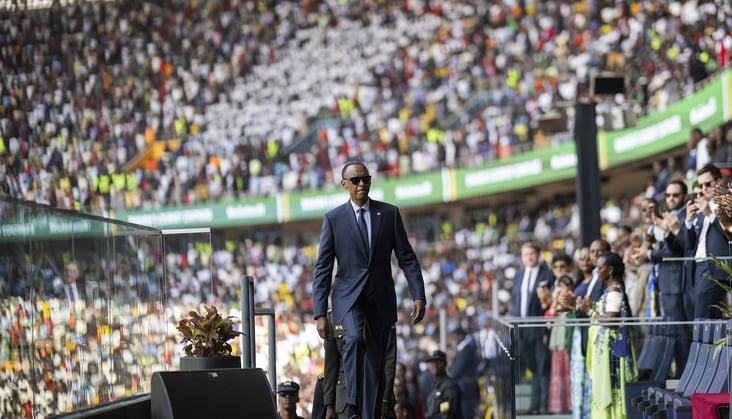
Paul Kagame has been sworn in for a fourth term as Rwanda’s president after winning 99% of the vote in last month’s election. While some praise him for bringing peace and stability to Rwanda after the 1994 genocide, others accuse him of running a repressive regime.
“Kagame’s electoral victory is a testament to his ability to maintain control and stability in Rwanda,” said a supporter. “He has brought peace and prosperity to our country, and we are grateful for his leadership.”
However, rights groups and critics argue that the election was undemocratic, citing the lack of opposition candidates and the fear of openly criticising Kagame.
“The margin of Kagame’s victory is proof of the lack of democracy in Rwanda,” said a spokesperson for a human rights organisation. “The fact that only two candidates were allowed to stand against him is a clear indication of the repressive nature of his regime.”
In his oath of office, Kagame vowed to preserve peace and national sovereignty, and to consolidate national unity. He also pledged to “never use the powers conferred upon me for personal interests.”
“Should I fail to honour this oath, may I be subjected to the rigours of the law,” he said.
Despite the criticism, Kagame’s inauguration ceremony was attended by several African heads of state and thousands of supporters in the packed 45,000 capacity Amahoro National Stadium in Kigali.