
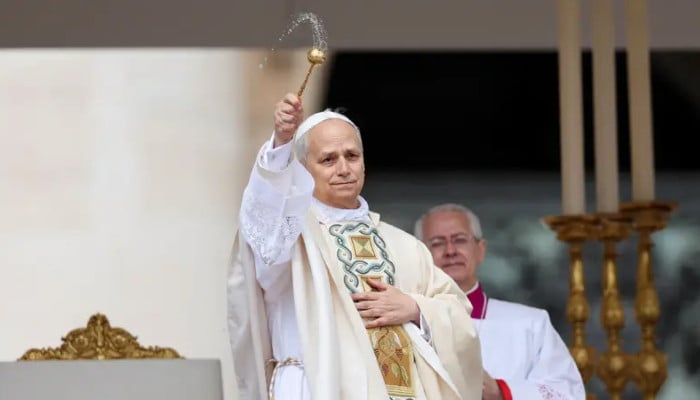
Under a bright Roman sky and the gaze of the world, Pope Leo XIV celebrated his inaugural Mass as head of the Roman Catholic Church in front of tens of thousands gathered in St. Peter’s Square.
With his first public homily, the first American pope signaled the start of a papacy rooted in healing and inclusion—both inside the Church and beyond.
The crowd stretched across the square as pilgrims, clergy, and dignitaries from around the globe came to witness the formal beginning of Leo’s pontificate. Among the attendees were U.S. Vice President JD Vance, Secretary of State Marco Rubio, Ukrainian President Volodymyr Zelensky, Canadian Prime Minister Mark Carney, and Australian Prime Minister Anthony Albanese. Their presence underscored the moment’s global weight.
Pope Leo’s message, delivered in a firm yet compassionate tone, centered on a call for peace in conflict-ridden parts of the world. He named Ukraine, Gaza, and Myanmar as places in urgent need of prayers and action. Without using politics or condemnation, he urged believers to remain faithful to the Church’s mission—not through force or persuasion, but by living out love and service.
As the 267th pontiff and spiritual leader to 1.4 billion Catholics, Leo emphasized that the Church’s future lies not in exclusion, but in embracing those on the margins. His words echoed the tone of his predecessor, Pope Francis, who passed away in April and often spoke about mercy, social justice, and reaching the forgotten.
After the Mass, Pope Leo greeted world leaders with a warm but deliberate manner, shaking hands with Vice President Vance and President Zelensky among others. The moment marked a shift in tone between the Vatican and some conservative factions in the U.S., where Leo’s ascent has stirred cautious hope of rebuilding strained ties. Vance, who had previously clashed with Pope Francis over immigration, offered a respectful greeting to the new pope—an interaction watched closely by American Catholics and political analysts alike.
Leo’s message, however, remained above the political fray. He focused on the spiritual duty of the Church and its believers in today’s divided world. With a calm but steady voice, he urged the faithful to reach out, include others, and find unity through shared purpose rather than pressure or dominance.
The homily was simple yet weighty—clearly the words of a leader stepping into history, aware of the moment and the expectations that come with it. As Pope Leo XIV now begins his work in full, the world will watch how he balances his roots, his message of peace, and the challenges of leading a global Church through uncertain times.