
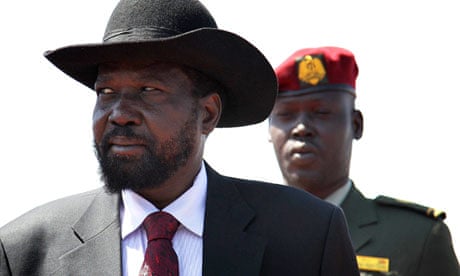
South Sudan’s political scene is facing renewed tension after President Salva Kiir removed Foreign Minister Ramadan Mohamed from his post without offering any public reason.
The announcement, made through state radio, comes just days after a dispute with the United States over deportation policy stirred diplomatic tensions.
The foreign minister’s dismissal follows a confrontation between Juba and Washington, triggered when South Sudan initially refused entry to a Congolese national deported from the United States. The standoff led to a strong warning from the U.S. government, threatening to cancel all visas held by South Sudanese nationals. Juba eventually complied on Tuesday, allowing the man to enter the country.
President Kiir quickly appointed Monday Simaya Kumba, the former deputy foreign minister, to take over the role. The leadership change signals an attempt to stabilize relations with Washington but also raises questions about Kiir’s broader strategy amid growing internal pressure.
Alongside the diplomatic row, South Sudan’s political landscape is being shaken from within. A breakaway faction of the SPLM-IO, the country’s main opposition group, has named Peacebuilding Minister Stephen Par Kuol as interim leader, claiming to replace First Vice President Riek Machar, who remains under house arrest.
The reshuffle has sparked backlash from within Machar’s camp. Critics argue the move is politically driven, aimed at weakening the 2018 peace agreement that brought an end to the brutal civil war. Analysts suggest the change could allow Kiir to remove Machar officially and fill the vacuum with loyal allies, tightening his grip on power as tensions simmer.
Riek Machar, a key figure in the fragile peace deal, was placed under house arrest last month over accusations that he incited rebellion. His faction denies involvement with the White Army militia, blamed for recent violence in Nasir town. The SPLM-IO warns that detaining Machar puts the entire peace process at risk.
Efforts to salvage the deal are ongoing. African Union envoys recently arrived in Juba to mediate, but so far, no breakthrough has been announced. Meanwhile, embassies from several Western nations—including the U.S., UK, France, and Germany—issued a joint call urging the government to release all political prisoners, stressing the need to restore trust in the peace process.
Despite internal fractures, SPLM-IO’s military wing continues to back Machar. In a statement, its spokesperson distanced the group from the changes in Juba, calling the interim leadership a betrayal. With the country’s political future hanging in the balance, many observers believe President Kiir is working to fortify his hold on power amid growing uncertainty about succession plans.