
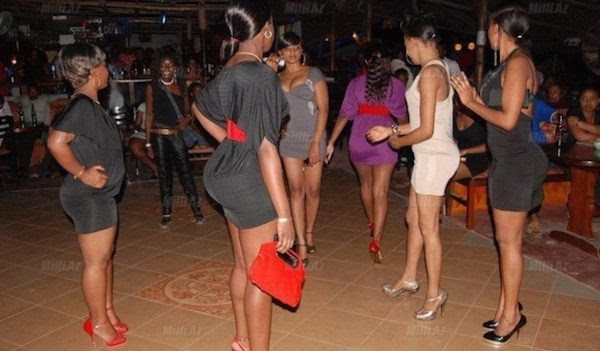
The National Bureau of Statistics (NBS) has revealed plans to incorporate illegal and hidden economic activities, such as prostitution and drug trafficking, into the calculation of Nigeria’s Gross Domestic Product (GDP).
This decision was announced during a sensitisation workshop on GDP and Consumer Price Index (CPI) rebasing, held in collaboration with the Nigerian Economic Summit Group (NESG).
Dr. Baba Madu, Head of National Accounts at the NBS, explained that the inclusion of these activities aligns with global best practices set out by the System of National Accounts (SNA) 2008.
He noted that some countries’ economies are driven by such activities, despite their illegal status.
While prostitution and drug trafficking are not legally recognized in Nigeria, they generate significant income, with some individuals involved in these sectors living better than those in the formal economy.
“We face challenges in collecting accurate data for these activities,” Madu said, citing issues with underreporting and the difficulty of obtaining reliable figures on illegal sales.
However, he emphasized that the contribution of these hidden sectors to the GDP is relatively small, accounting for only about 3.0% to 3.5% of the total GDP.
The NBS also proposed 2019 as the new base year for GDP calculations, highlighting that the year was marked by relative economic stability before the disruptions caused by the COVID-19 pandemic and various policy changes in the following years.
Additionally, the rebased GDP will now include previously unaccounted-for sectors such as the digital economy, pension fund administration, the activities of the National Health Insurance Scheme (NHIS), the Nigerian Social Insurance Trust Fund (NSTIF), modular refineries, and domestic households employing labor.
The NBS’s decision to expand the scope of the GDP calculation comes as part of efforts to more accurately reflect the evolving nature of the Nigerian economy.