
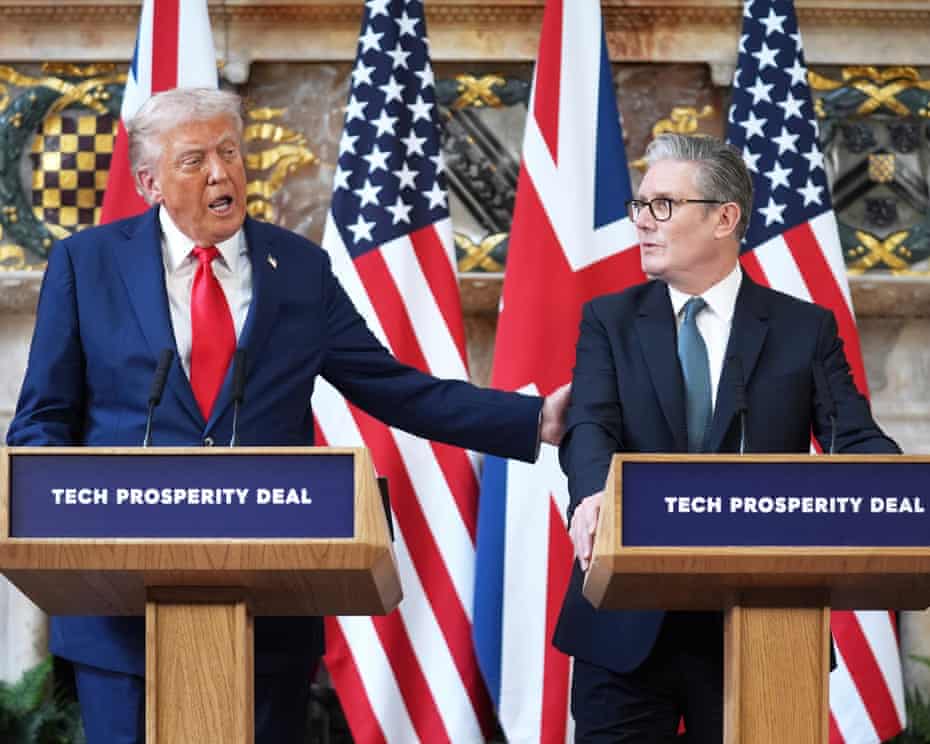
A new study has accused former US president Donald Trump of driving a culture war in Europe by backing rightwing allies, interfering in elections, and challenging the European Union on the global stage.
The joint report, released by the European Council on Foreign Relations and the European Cultural Foundation, claims Trump is working to shift Europe’s politics toward conservative values linked to his Maga movement. Researchers said his approach involves boosting nationalist leaders, questioning EU authority, and framing disputes around issues such as free speech, migration, and security spending.
According to the study, Trump’s return to office has seen him sideline EU leaders in major talks, including discussions on Ukraine, while using trade negotiations and public criticism to weaken trust in European institutions. It pointed to his support for nationalist figures in Poland and his administration’s messaging on “civilisational allies” in Europe as examples of attempts to reshape the political balance.
The report warns that Europe is caught in a struggle over its identity and its ability to act independently in global affairs. Analysts said Trump’s strategy operates on two levels: an ideological fight over values and a wider effort to test Europe’s unity and resilience.
Polling data used in the study shows public trust in the EU is at its highest point since 2007, with rising support for stronger European defence and greater independence from the US. Most citizens in member states surveyed expressed attachment to the EU and saw it as essential for handling global crises and protecting national interests.
The findings suggest European leaders should respond with greater confidence rather than relying on strategies of appeasement or delay. The authors argue that while avoiding constant confrontation with Washington is necessary, Europe must use its political and legal tools to protect its democratic model and strengthen its position.
The report concludes that European unity remains strong and that the EU has the capacity to defend its values against external pressure, but leaders must recognise that Trump’s approach represents a deliberate challenge to the bloc’s stability and authority.