
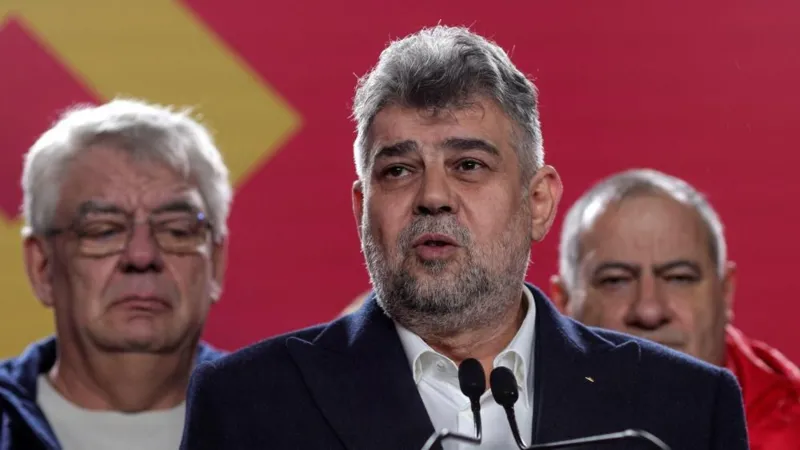
Romania’s political landscape plunged into uncertainty after Prime Minister Marcel Ciolacu resigned following a strong first-round victory by nationalist candidate George Simion in the presidential election.
Simion, leader of the far-right Alliance for the Union of Romanians (AUR), secured 40.9% of the vote and is the frontrunner for the 18 May runoff. He will face liberal Bucharest Mayor Nicușor Dan, who narrowly edged out the candidate from Ciolacu’s Social Democrat Party (PSD).
In response to the result, Ciolacu announced the collapse of the pro-EU ruling coalition, saying it had “no legitimacy” to continue after failing to achieve its objectives, particularly a joint presidential candidate. His resignation signals up to 45 days of potential political instability, according to political analysts.
Simion’s rise has been fueled by widespread dissatisfaction with Romania’s political elite and backlash over annulled elections last year. Although he has denied being pro-Russian, his nationalist rhetoric, opposition to arming Ukraine, and calls to restore historical Romanian borders have stirred concerns in the EU and NATO.
As Simion prepares for the runoff, Romania faces a turning point—between deepening populist nationalism or maintaining a more pro-European trajectory under Dan. A caretaker government will be appointed by interim president Ilie Bolojan until a new administration can be formed.