
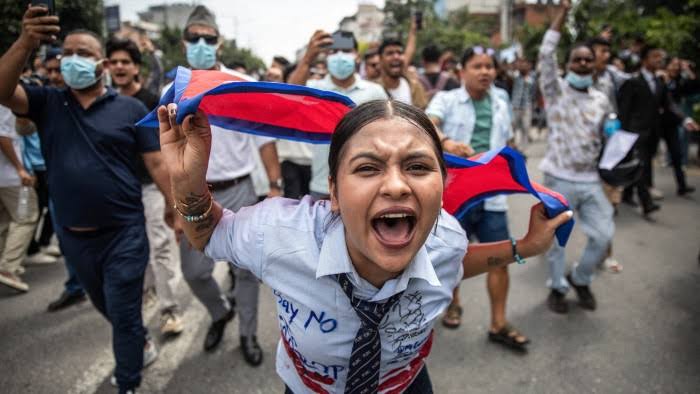
Nepal’s Generation Z-led protests entered their second day on Tuesday, September 9, 2025, as defiant crowds filled the streets of Kathmandu despite a strict curfew imposed across key districts of the valley.
The unrest began on Monday, September 8, when the government banned 26 social media platforms—including Facebook, Instagram, YouTube, WhatsApp, and X—after claiming the platforms failed to register under new rules.
The sudden restrictions ignited outrage among young people, who framed the ban as an attack on their freedoms and a reflection of corruption and misrule.
Violence broke out near the federal parliament when protesters tried to push through barricades.
Security forces responded with water cannons, tear gas, rubber bullets, batons, and in some cases live ammunition. By Monday evening, at least 19 people had been killed and more than 100 injured.
On Tuesday, thousands of young demonstrators continued to march and burn tires in open defiance of the curfew.
Anger intensified as reports emerged of harsh police action. Some protesters targeted high-profile properties, with residences of senior leaders, including President Ramchandra Paudel’s house, set ablaze.
Faced with mounting pressure, the government rolled back the social media ban on September 9.
Home Minister Ramesh Lekhak resigned, and Prime Minister K.P. Sharma Oli promised compensation for victims, free medical treatment for the injured, and a committee to investigate the killings within 15 days.
The protests reflect widespread frustration among Nepal’s youth over corruption, shrinking opportunities, and restrictions on free expression.
What started as a backlash against digital censorship has now turned into one of the country’s most powerful youth-led movements in recent years, challenging the authority of the state and demanding accountability.