
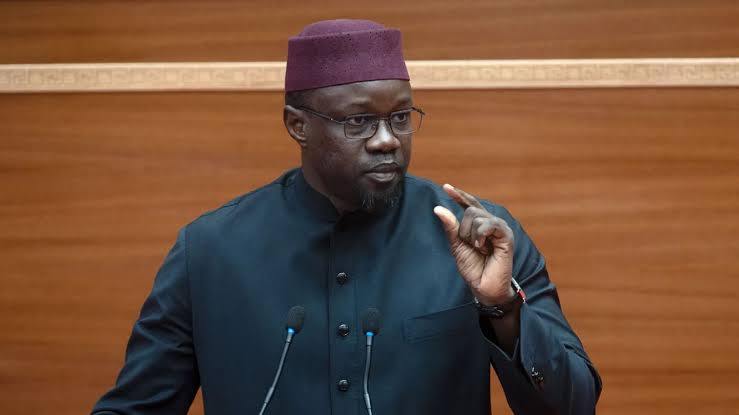
Senegal has firmly expressed its support for the International Criminal Court (ICC) and called on the United States to withdraw sanctions imposed on the tribunal and its staff.
The foreign ministry described the sanctions as a serious breach of judicial independence and an obstacle to judges and prosecutors carrying out their duties peacefully.
Senegal reaffirmed its full support for the ICC and urged other nations that signed the Rome Statute to stand by the court’s independence.
Among those sanctioned is Mame Mandiaye Niang, a Senegalese deputy prosecutor at the ICC.
Senegal’s prime minister, Ousmane Sonko, praised Niang’s dedication to justice and pledged his complete and unwavering support.
He also commended President Bassirou Diomaye Faye for his leadership in defending the ICC’s mission.
The US State Department announced sanctions this week against four ICC officials—two judges and two prosecutors—citing their roles in pursuing investigations into alleged war crimes by US and Israeli officials.
Sanctions include asset freezes and restrictions within US jurisdiction.
This marks the latest in Washington’s escalating campaign against the Hague-based court.
Critics such as the ICC and the United Nations have condemned these sanctions as attacks on judicial independence, noting that they severely impair the court’s ability to pursue justice.
Additionally, the International Court of Justice (ICJ) recently issued a provisional ruling regarding Israel’s conduct in Gaza.
The court ruled that Israel must take all measures within its power to prevent acts within the scope of the 1948 Genocide Convention, such as killing, causing serious harm, imposing destructive living conditions, and preventing births among Palestinians in Gaza, even though it did not call for a ceasefire.
The court found it plausible that Israel may have committed genocide and ordered urgent action to protect Palestinians—though it cannot enforce its rulings.