
The death toll from the police shooting at Owode Onírin Spare Parts Market in Lagos has climbed to six, deepening anger among traders and families who are demanding accountability.
The shooting, which took place on August 27, was carried out by four mobile policemen led by Abiodun Hakeem Ariori. Witnesses said the officers stormed the market and fired into the crowd, killing four traders instantly.
Two other victims who were rushed to hospital later died from their injuries. The most recent, Aderemi Adeoye, passed away on September 1 after undergoing surgery and being placed on life support. He left behind a young wife and a seven-month-old baby. Others who lost their lives in the incident were Seyi Akinboye, Adeoye Taiwo, Dare Mufutau, Abraham Temilola, and Wale Adebayo.
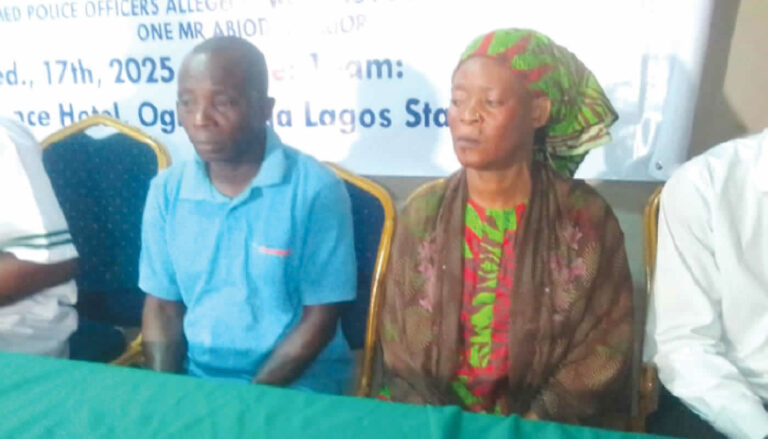
Relatives of the victims shared painful accounts of the tragedy during a press briefing in Lagos on Wednesday. Families described how some of the men died in their shops, while others bled to death before medical help could reach them. Several of the deceased were breadwinners, leaving behind widows, children, and elderly parents now struggling with the loss.
The Centre for Human and Socio-Economic Rights (CHSR) condemned the killings, accusing state officials of ignoring earlier petitions from the traders who had raised alarms about threats in the market. The group also alleged that powerful interests were using police and private agents to forcefully seize land under the guise of development projects.
The CHSR further demanded that the police disclose the identities of the officers involved, insisting that they must face trial. It also called for compensation for the families of the victims and urged the Federal Government to take over the case, arguing that the Lagos State Government could not be trusted to handle it fairly.
The killings have drawn comparisons with past incidents, including the July 2023 case in which the Baale of Lotu Town, Fatai Jubril, was shot dead by a mobile policeman during a land dispute, a case that has remained unresolved in court.
For many of the grieving families, justice and accountability remain the only way to bring closure to the tragedy that has robbed them of their loved ones.