
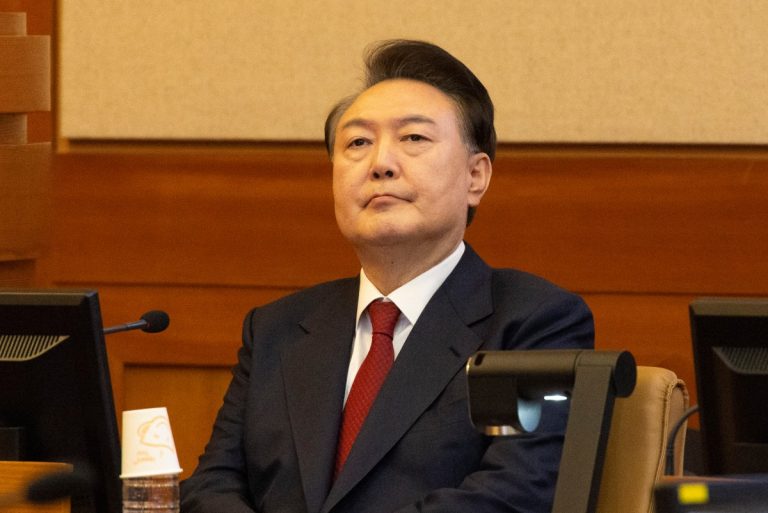
South Korea’s Constitutional Court is set to announce its decision on President Yoon Suk Yeol’s impeachment on Friday, months after he was suspended for attempting to impose martial law.
The ruling could determine whether Yoon remains in office or if the country will head into a snap election.
Yoon’s attempt to use the military to suppress opposition in December sparked a political crisis. He sent armed soldiers into parliament, but lawmakers defied the show of force and swiftly voted to impeach him. His suspension has left South Korea in a leadership vacuum, with economic instability growing amid global trade tensions.
The court has spent weeks reviewing impeachment hearings and deliberating over the case. At least six of the eight justices must vote in favor for Yoon to be officially removed. If that happens, elections will be required within 60 days.
Public opinion remains deeply divided. Every weekend, large crowds have gathered in central Seoul, either supporting Yoon or demanding his removal. The political landscape is further complicated by opposition leader Lee Jae-myung, who recently had an election law conviction overturned, clearing his path to run for president if Yoon is ousted. However, another appeal could bar him from office.
Yoon, a former prosecutor, was briefly detained in January on charges of insurrection but was released in March. He has consistently denied wrongdoing, blaming the impeachment on political opponents. His party has urged the court to make a fair decision, while the opposition insists his removal is necessary to uphold the constitution.
In a separate case last week, the court overturned the impeachment of Prime Minister Han Duck-soo, reinstating him as acting president. Legal experts note that this decision does not directly impact Yoon’s fate, as it focused on different legal grounds.
The upcoming ruling will be a defining moment for South Korea, potentially reshaping its political future and determining whether the country moves forward through an election or remains embroiled in legal and political uncertainty.