
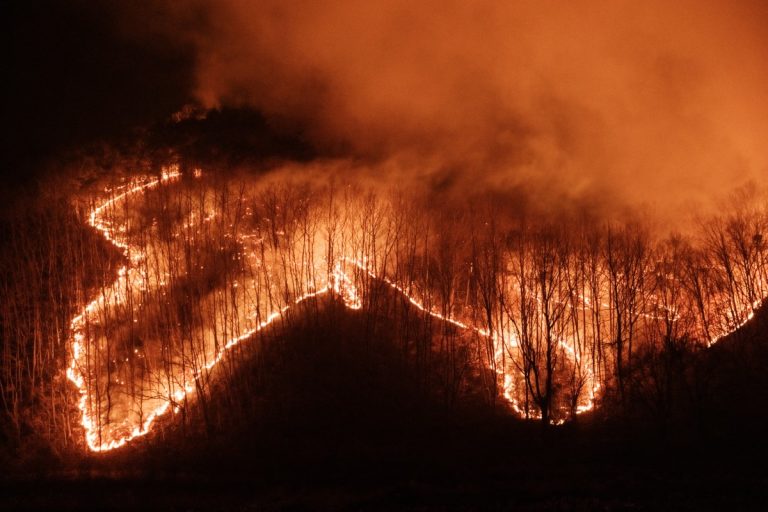
Wildfires sweeping across southeastern South Korea have forced thousands to evacuate, destroyed a historic Buddhist temple, and threatened a UNESCO-listed village.
The fires, which ignited over the weekend, have already claimed four lives and displaced thousands as authorities struggle to contain the flames amid dry and windy conditions.
The blazes, now the third largest in the country’s history, have burned nearly 14,700 hectares of land. Officials declared a state of emergency in four regions, warning that the fires could spread further. Strong winds and thick haze have made firefighting efforts difficult, with containment rates dropping in some areas.
Among the hardest-hit locations is the city of Uiseong, where flames tore through Gounsa Temple, a thousand-year-old Buddhist site. Firefighters and heritage workers tried to protect valuable artifacts and cover statues, but by Tuesday, the temple had been reduced to ashes.
Authorities also issued evacuation orders for the Hahoe Folk Village, a popular tourist destination recognized as a UNESCO World Heritage site. The historic village, known for its preserved traditional homes, was directly in the path of the approaching fire, prompting emergency alerts for residents to flee.
Over 6,700 firefighters and emergency personnel have been deployed, with nearly 40% focused on battling the Uiseong blaze. Meanwhile, the Ministry of Justice relocated around 3,500 inmates from correctional facilities in the region to keep them out of danger.
Weather conditions have worsened the situation, with officials warning that even a small spark could trigger new fires. In Daegu and North Gyeongsang province, extreme dryness and strong winds have fueled concerns that the fires could spread rapidly.
Investigations revealed that the Uiseong fire was likely started accidentally by a person tending to a family gravesite. Prime Minister Han Duck-soo urged the public to follow fire prevention guidelines, emphasizing that many wildfires result from human negligence.
South Korea’s worst wildfire disaster occurred in April 2000, when flames scorched nearly 24,000 hectares along the east coast. Experts warn that extreme weather patterns, including heatwaves and dry spells, could make wildfires more frequent and severe.
While South Korea struggles to contain the crisis, Japan has also faced multiple wildfires in recent days. Earlier this month, Japan experienced its most devastating wildfire in over 50 years, burning nearly 2,900 hectares and leaving at least one person dead.
With emergency teams still battling the South Korean fires, residents remain on high alert, hoping the flames can be controlled before more historic sites and homes are lost.