
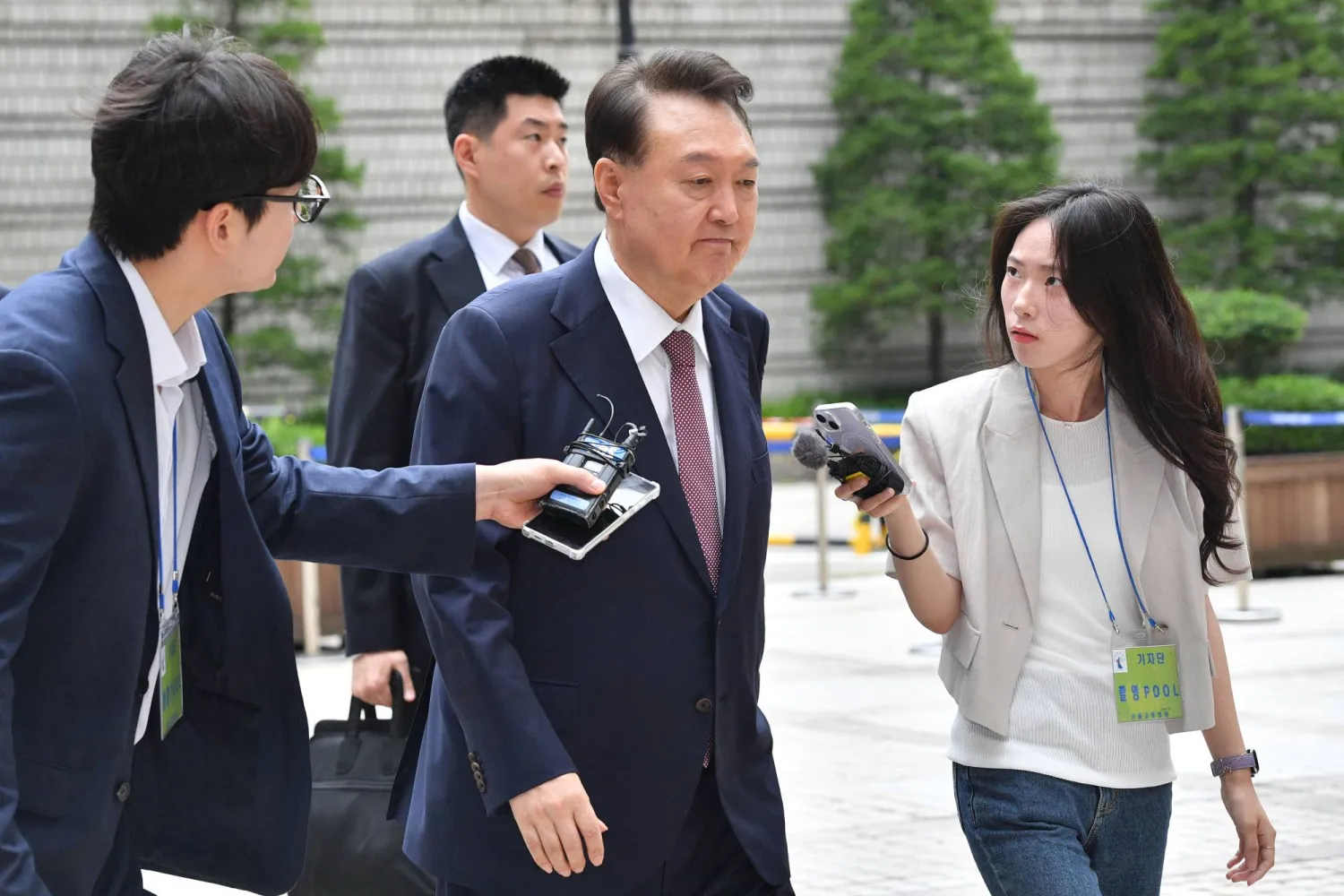
South Korea’s former President Yoon Suk Yeol has been indicted on new criminal charges tied to his controversial martial law order declared in December last year.
The fresh charges come about three months after Yoon was officially removed from office following his failed attempt to impose emergency rule.
The Seoul Central District Court confirmed on Saturday that Yoon will remain in jail for up to six months while awaiting trial.
His arrest was approved last week based on a request from investigators working under independent counsel Cho Eun-suk.
The latest charges include abuse of power, as Yoon allegedly excluded several Cabinet members when pushing through the martial law decision.
According to South Korean law, such a declaration requires the full Cabinet’s approval.
Authorities also accused Yoon of faking an official document to meet legal conditions for the martial law order, and later destroying that document.
During the December 3 martial law attempt, Yoon deployed military and police forces to the National Assembly, which was under opposition control.
Despite this, enough lawmakers entered the building to overturn his decree.
As a result, the martial law was quickly withdrawn, and Yoon’s Cabinet was forced to reverse the decision.
Shortly after, Yoon was impeached by lawmakers, including some from his own party.
In January, prosecutors filed rebellion charges against him, a serious offense that could lead to life imprisonment or the death penalty if proven.
Though he was briefly released from detention in March to stand trial, he was returned to custody following new findings.
In April, the Constitutional Court formally removed Yoon from office, triggering a snap election.
His successor, President Lee Jae Myung, a former opposition leader, approved the launch of independent probes into the martial law case and other possible misconduct involving Yoon and his inner circle.
Cho Eun-suk was appointed to lead the investigation.
By May, Yoon was also charged with ordering security forces to block government buildings, including election offices, in violation of their legal roles.
The legal battle around Yoon continues, drawing public and political attention nationwide.