
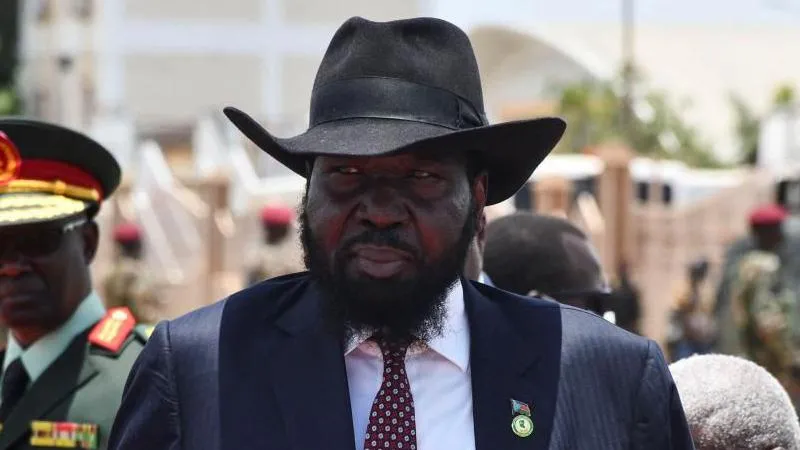
Tensions between South Sudan and the United States have flared following a sweeping visa ban imposed by Washington on all South Sudanese nationals, a move Juba says is based on a case of mistaken identity.
The government of President Salva Kiir has pushed back strongly, stating that the individual at the center of the dispute is not a South Sudanese citizen at all.
The visa restrictions were announced by US Secretary of State Marco Rubio, who accused South Sudan of failing to accept deported citizens from American territory. In response, South Sudan’s foreign ministry claimed that the person refused re-entry into the country was actually a national of the Democratic Republic of Congo and not of South Sudan. The ministry said the man was returned to the US and the evidence proving his Congolese nationality was shared with American authorities.
The decision by the US marks the first time a full visa ban has been applied to every passport holder of a specific nation since President Donald Trump returned to office earlier this year. Trump, whose campaign platform focused heavily on immigration control, had promised aggressive deportation policies, and the latest move appears to reflect that agenda.
According to the US government, the ban came after South Sudan’s transitional leadership failed to comply with repatriation procedures for deported citizens. Rubio said that all South Sudanese trying to enter the US would now be denied entry, and indicated the restrictions would remain until South Sudan fully cooperates with American immigration protocols.
Juba, however, sees things differently. In a Monday statement, the foreign ministry said it “deeply regrets” the US decision, describing it as an unjust punishment based on a single incident involving a misidentified person. South Sudan’s Information Minister Michael Makuei Lueth went further, accusing the US of deliberately inflaming tensions by using the episode to justify broader measures against the young nation. He argued that no independent state would willingly receive foreign deportees without verification.
The visa ban comes at a fragile moment for South Sudan. Violence recently erupted in parts of the country, threatening to unravel a peace deal signed in 2018 that ended a brutal five-year civil war. First Vice-President Riek Machar has been placed under house arrest, with President Kiir accusing him of plotting fresh rebellion, raising fears of renewed conflict.
As instability grows at home, the US has begun scaling back its diplomatic presence in South Sudan. Non-emergency staff were ordered to leave last month due to security concerns. The timing of the visa ban further complicates the already strained relations between the two nations.
South Sudanese nationals currently living in the US have previously been protected under Temporary Protected Status (TPS), which allows them to stay in the country temporarily due to unsafe conditions back home. That protection is now set to expire by May 3, putting thousands at risk of deportation, even as their country faces the threat of returning to war.