
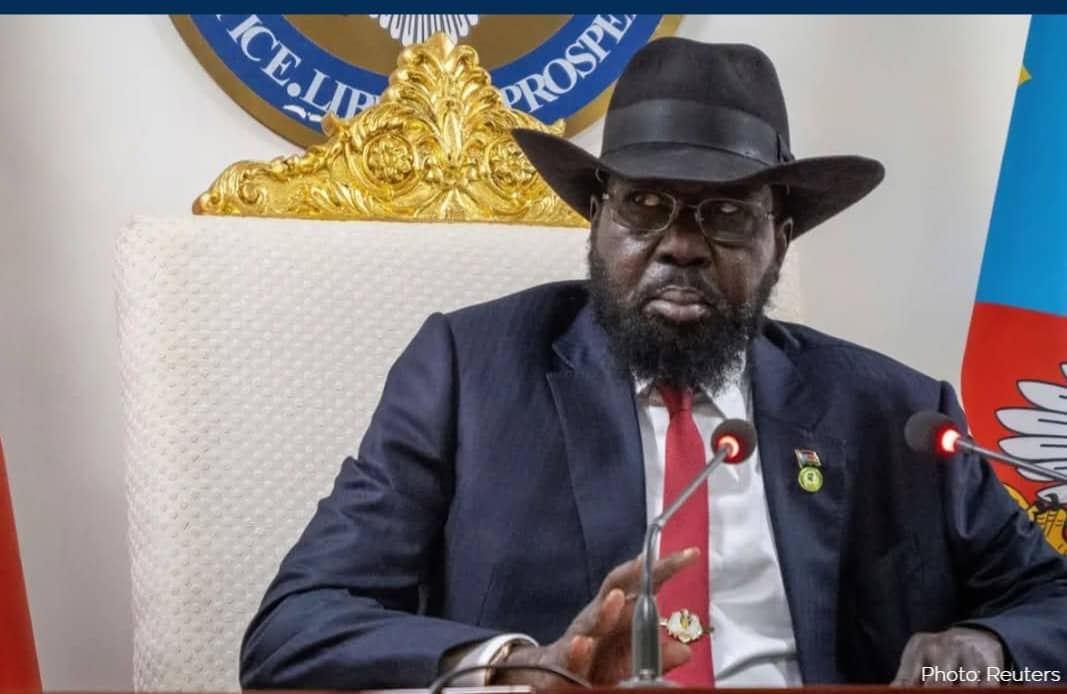
South Sudan’s President Salva Kiir has fired the country’s finance minister, Marial Dongrin Ater, who had held the post since July 2024. The decision was announced on state-owned radio, with no reason given for the dismissal. Athian Ding Athian will take up the position, which he previously held between 2020 and 2021.
This move is part of a series of changes in the finance ministry, marking the seventh replacement since 2020. The country’s economic performance has faced significant challenges due to communal violence, dwindling crude oil export revenue, and export disruptions caused by the war in neighboring Sudan.
The International Monetary Fund (IMF) has forecast a 4.3% contraction of the economy for 2025, with inflation expected to reach 65.7% during the same period. These economic challenges have put pressure on the government to deliver stability and growth.
President Kiir’s decision to replace the finance minister comes amid other significant political developments in the country. Recently, First Vice President Riek Machar was put under house arrest, sparking fears of renewed conflict. Information Minister Michael Makuei said the arrest was due to Machar’s alleged contacts with supporters and efforts to “agitate them to rebel against the government with the aim of disrupting peace so that elections are not held and South Sudan goes back to war.” Machar’s party denies the accusations.
Athian Ding Athian’s appointment is seen as an effort to stabilize the economy and address the challenges posed by internal conflict and regional instability. Athian’s previous experience in the finance ministry could be crucial in navigating the country’s economic difficulties.
The changes in the government come as South Sudan struggles to recover from years of conflict and economic hardship. The country gained independence from Sudan in 2011, but internal conflicts, particularly the civil war from 2013 to 2018, have severely impacted its development.
The new finance minister will face significant challenges in managing the economy, including addressing the decline in oil revenues, managing inflation, and promoting economic growth. The international community is closely watching the situation, with the IMF and other organizations likely to play a crucial role in supporting South Sudan’s economic recovery efforts.