
By Abasi Ita
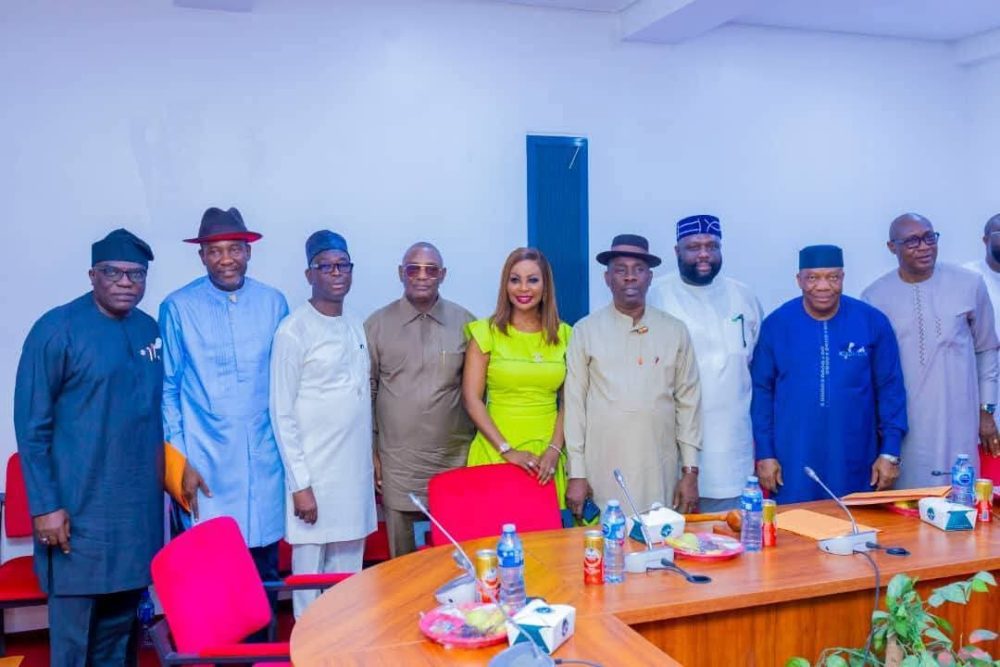
The Managing Director and Chief Executive Officer of the South South Development Commission, Ms. Usoro Akpabio, has presented the Commission’s 2026 Budget Proposal to the National Assembly, emphasizing a shift toward measurable and results-driven development across the South South region.
Addressing the Senate and House of Representatives Committees on the SSDC, Ms. Akpabio highlighted that the budget marks a transition from foundational planning to structured, transparent, and accountable project execution. She stressed that the region’s substantial contributions to the national economy must be matched by sustainable and inclusive development.
“The South South must not only generate national revenue. It must experience development proportional to its contribution, because when the region develops structurally, Nigeria advances sustainably,” she stated.
The SSDC boss revealed that the 2026 budget also targets key infrastructure gaps, particularly in rural communities, while enhancing electricity supply, access to quality healthcare, water provision, and education. Ms. Akpabio noted the success of youth and women empowerment programs, digital capacity-building initiatives, and support for micro, small, and medium-scale enterprises, all of which have created jobs and boosted economic participation across the region.
Looking ahead, she outlined the Commission’s roadmap for 2026 and beyond, prioritizing industrial development hubs, strengthened agricultural value chains, technology-driven projects, and close collaboration with local governments and community stakeholders to ensure transparency and effective project delivery.
The Senate session was presided over by Senator Benson Konbowei, Chairman of the Senate Committee on SSDC, while the House presentation was received by Hon. Julius Pondi, Chairman of the House Committee on SSDC.
Ms. Akpabio concluded that the 2026 budget is designed to accelerate socio-economic development, reinforce governance structures, and reposition the South South as a hub of innovation, productivity, and equitable growth. She described the budget as a strategic blueprint to transform the region and fully harness its potential in Nigeria’s national development.