
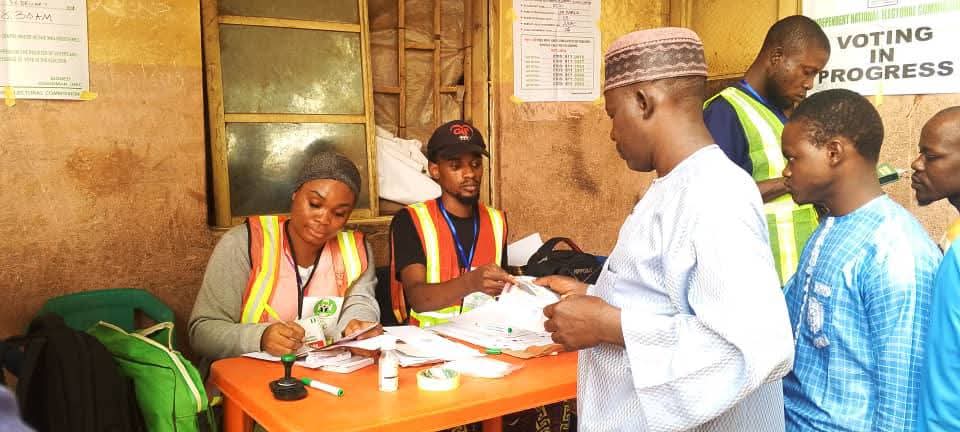
The Director of the Abuja School of Social and Political Thought, Sam Amadi, along with other stakeholders, has condemned the Independent National Electoral Commission’s (INEC) directive mandating the revalidation of registered voters. They described the move as illegal, unnecessary, and a potential threat to the credibility of the 2027 elections.
Speaking at a briefing in Abuja on Thursday, Amadi—a former Chairman of the Nigerian Electricity Regulatory Commission—expressed concern over INEC’s level of preparedness and the lingering public distrust in the commission following the 2023 general elections. He warned that the proposed revalidation exercise would further erode confidence in the electoral body rather than restore it.
While acknowledging INEC’s statutory authority to update the voter register, Amadi argued that compelling already registered voters to undergo a fresh validation process has no legal basis. He noted that the Electoral Act only empowers the commission to correct errors, remove duplicate entries, and register new voters—not to carry out a blanket reconfirmation of voter status.
Amadi also criticised the timing of the exercise, which comes less than a year before the general elections, warning that it could disrupt INEC’s schedule and conflict with other critical electoral activities. He added that low public awareness and prevailing distrust in the electoral system could worsen voter apathy.
He further raised concerns that the revalidation process might be manipulated to suppress votes in certain regions, pointing out that a lack of transparency could prevent Nigerians from independently verifying participation data released by INEC.
“The supposed benefits of this exercise are far outweighed by the risks, including inefficiency, voter suppression, and further erosion of public trust,” Amadi said, urging INEC to rescind the directive.
Echoing his concerns, researcher Paul Obi warned that proceeding with the exercise could trigger widespread electoral disputes and potential cancellations. He argued that if the courts determine INEC lacks the legal authority to enforce voter revalidation, elections conducted using such a register could be invalidated.
Obi also noted that disenfranchising a significant number of voters through the process could undermine the legitimacy of elections at all levels, including governorship, National Assembly, and presidential polls.
Blessing Elaigwu, a student of the Abuja School of Social and Political Thought, added that the exercise could open the door to both wrongful inclusion and exclusion of voters. She cautioned that new, unverified data could compromise the integrity of the voter register, while legitimate voters risk being disenfranchised.
The stakeholders collectively called on INEC to refocus its efforts on ensuring that votes are freely cast, accurately counted, and transparently declared—stressing that these remain the core issues affecting electoral integrity in Nigeria.
They maintained that pursuing a controversial and legally questionable revalidation exercise would only deepen existing distrust in the electoral process ahead of the 2027 elections.