
On July 30, 2025, a powerful earthquake registering 8.7 magnitude struck beneath the seabed near Russia’s Kamchatka Peninsula.
The quake, recorded at a shallow depth of about 19 km and located roughly 125 km southeast of Petropavlovsk‑Kamchatsky, led to tsunami warnings across many Pacific nations.
Residents in Russia’s far east experienced waves up to four metres high, flooding parts of Severo‑Kurilsk and prompting evacuation of its entire population of around 2,000 people.
Officials described this quake as the strongest in decades for the region.
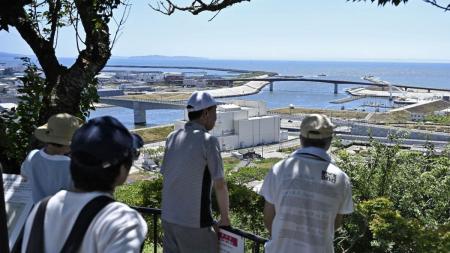
In the hours that followed, tsunami alerts were issued across the Pacific. Japan’s early warning agency projected waves as tall as three metres hitting east coast areas and initiated evacuations for nearly two million people in coastal zones.
In Hawaii, emergency shelters opened, harbours closed, and sirens sounded—some locals captured the rare alert on video after not hearing it for over a decade.
Alaska’s Aleutian Islands and US West Coast states, including California, Oregon, and Washington, were placed under tsunami warnings or advisories.
Expected wave heights ranged between 1 and 3 metres in some areas, while other regions were advised of possible dangerous currents even if tsunami sizes remained small.
Across Latin America and Pacific island nations—such as Ecuador, Canada, China, Micronesia, Taiwan, the Philippines, and New Zealand—official warnings urged citizens to stay clear of beaches, harbours, rivers, and coastal zones.
No major injuries or loss of life have been confirmed as of now.
Emergency teams continue to watch for aftershocks and further wave activity, stressing that tsunami effects can persist over many hours.
Monitoring remains active from Russia through to the South Pacific region.