
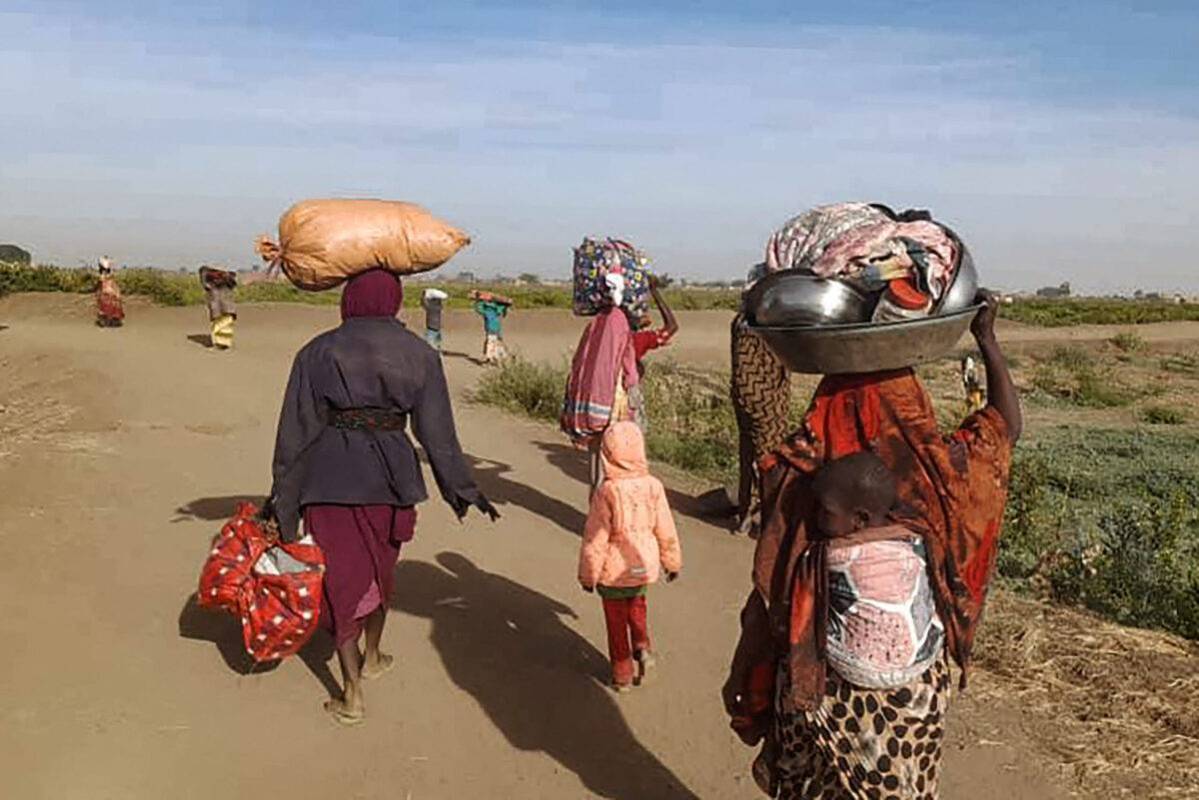
Hundreds of families have fled their homes in western Sudan’s North Darfur after violent attacks by the Rapid Support Forces (RSF), worsening an already dire humanitarian crisis.
The International Organization for Migration (IOM) confirmed on Monday that more than 500 families were forced to leave two villages as fighting surged earlier this month.
The displacement occurred between April 1 and 6, affecting the villages of Abu Hamira and Al-Rakab. Local sources reported that shelling by the RSF injured at least three people, including two children, in Abu Hamira. The attacks have sparked fear and chaos, with many families now seeking safety in already overwhelmed camps or nearby towns.
The RSF, a powerful paramilitary group that has been at war with Sudan’s army since April 2023, has not commented on the latest incidents. However, the violence reflects a shifting battlefield, as the army appears to be regaining territory across several parts of the country. In recent weeks, the RSF has lost ground in key areas such as Khartoum, Al-Jazira, White Nile, North Kordofan, Sennar, and Blue Nile.
The ongoing war has had a devastating impact. More than 20,000 people are confirmed dead, and the United Nations estimates that 14 million have been displaced. However, independent research from US scholars suggests the real death toll may be as high as 130,000. As fighting spreads into more regions—now affecting 13 of Sudan’s 18 states—the pressure on civilians continues to grow.
Humanitarian groups are raising alarms about the scale of suffering. Food shortages, lack of medical care, and limited shelter options are creating life-threatening conditions. Many areas are on the brink of famine, and aid organizations warn that without urgent international action, the crisis could spiral further out of control.
Calls for a ceasefire have grown louder, with the United Nations and world powers urging both sides to stop the fighting and allow humanitarian aid to reach those in need. But with no clear resolution in sight, displaced families in Darfur and across Sudan face an uncertain and dangerous future.