
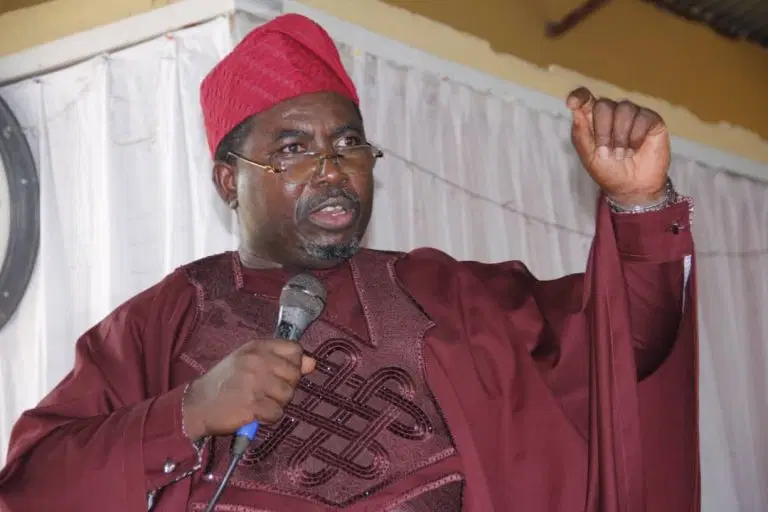
The appointment of Professor Joash Amupitan as the new Chairman of the Independent National Electoral Commission comes at a defining moment in Nigeria’s democratic journey. The nation stands at a critical crossroads where confidence in the ballot has been weakened, and many citizens now doubt whether elections still express the will of the people.
Recent electoral cycles were marked by technical failures, late deployment of materials, widespread vote buying, and litigations that dragged on for months. As a result, public trust in the electoral process has declined to one of its lowest points since the return to democratic rule.
It is worth noting that names carry symbolic meaning in many African cultures, and Professor Amupitan’s names speak to the significance of the task before him. Joash means God has given, while Amupitan in Yoruba means one who tells the story or a custodian of history. Taken together, his full name suggests a God given custodian of national memory, one whose leadership will shape the story that future generations will tell about Nigeria’s democracy. The weight of this symbolism cannot be ignored. His stewardship will either restore faith in elections or deepen the crisis of trust.
Professor Amupitan has already declared that the courts cannot continue to determine election outcomes. This is a powerful and necessary statement. Nigeria has arrived at a point where judicial verdicts, rather than votes, often decide who holds public office. When polling units become mere rituals and the real contest shifts to the courtroom, the essence of democracy is lost.
Equally significant is his pledge to curb the rising tide of pre election litigations that have burdened institutions and destabilized political contests even before ballots are cast. To achieve this, the new INEC leadership must enforce internal democracy within political parties, ensure transparent primaries, and strengthen regulatory oversight.
A comprehensive audit of electoral technology is also urgently required. The failures of voter accreditation systems and electronic result transmission during key elections revealed gaps in planning and field supervision. Technology meant to safeguard transparency must be reliable beyond doubt. All systems must be tested publicly and independently.
Vote buying remains a grave threat to electoral integrity. When the ballot becomes a marketplace, governance becomes an auction. INEC must work closely with security agencies, civic groups, and community leaders to dismantle this cancer at its roots.
Finally, the Commission must rebuild the bridge of trust between itself and the electorate. Communication must become clearer, procedures more consistent, and accountability more visible.
The memory of June 12 reminds us that free and fair elections are possible in Nigeria. The task before Professor Joash Amupitan is to help the nation reclaim that promise.
The future of the Nigerian vote now rests on his courage, his integrity, and his will to lead.