
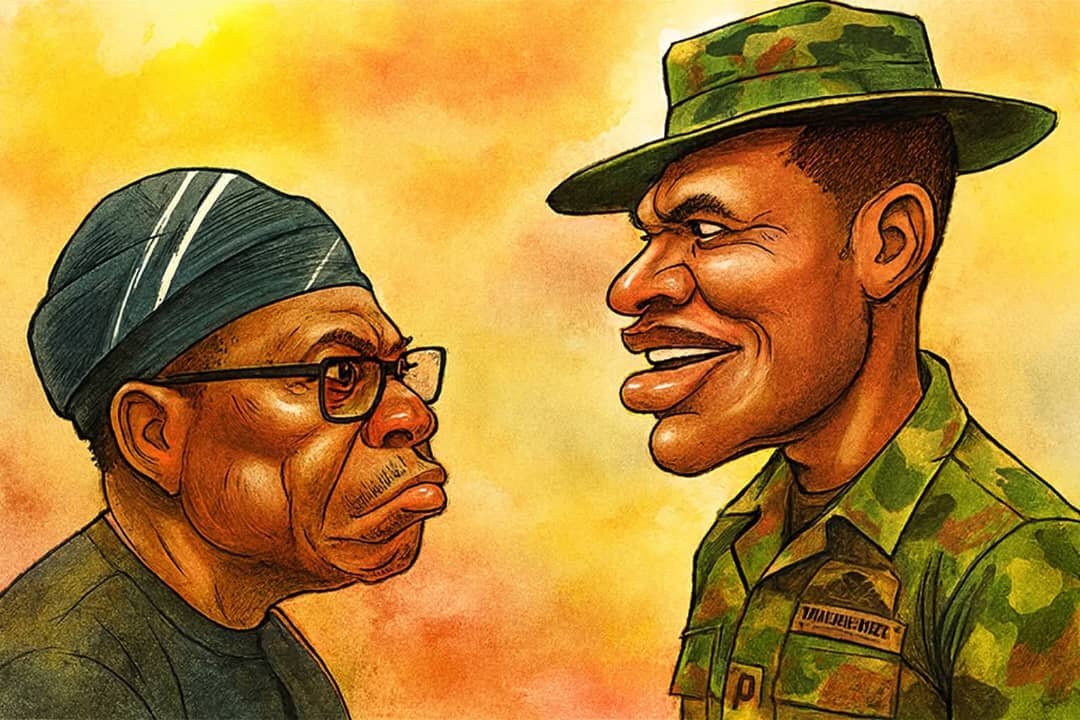
The recent confrontation between the Minister of the Federal Capital Territory, Nyesom Wike, and a naval officer, Lieutenant Commander Abdullahi Yerima, over a disputed parcel of land in Abuja’s Gaduwa District, has once again raised serious concerns about the need for restraint, decorum, and respect for institutional boundaries among government officials.
The incident, which quickly became a national talking point after a video surfaced online, showed the Minister in a heated exchange with the naval officer and his team guarding a property reportedly linked to a former Chief of Naval Staff.
While the matter is under investigation, the episode has exposed the recurring friction that often arises when political authority and military hierarchy intersect without adherence to due process.
It is commendable that the Minister of State for Defence, Bello Matawalle, has intervened publicly to clarify the facts and commend the naval officer’s professional conduct during the encounter.
Matawalle rightly emphasized that the officer acted under lawful orders and displayed discipline, restraint, and respect throughout the incident.
His statement also reinforced an important principle that government officials, regardless of their position, must follow established channels of communication when dealing with other institutions of state.
What transpired between the FCT Minister and the naval officer was both unnecessary and avoidable.
Administrative disputes, especially those involving land and inter-agency responsibilities, should be handled through formal procedures rather than direct confrontation.
By bypassing the established communication process and engaging with military personnel at the site, the Minister risked undermining protocol and the spirit of cooperation among government bodies.
We demands a firm response from the Presidency. It is time for the nation’s leadership to issue a clear directive cautioning public officials against any conduct that may erode inter-agency harmony or show disrespect to security institutions.
We strongly believe, such action would help deescalate the growing ethnic and institutional tensions that have begun to emerge from public debate surrounding the incident.
In addition, the federal government should consider introducing mandatory orientation sessions on ethical conduct, emotional intelligence, and professional communication for all public officials. Such sessions would reinforce the values of civility, accountability, and respect for institutional hierarchy.
Regular refresher courses can help prevent similar lapses in the future.
The Presidency should also insist on strict adherence to official communication channels in addressing matters involving ministries, security agencies, and other public institutions.
Clear lines of engagement are essential to prevent minor disagreements from escalating into public embarrassment or institutional mistrust.
Nyesom Wike’s reputation for assertive leadership is well known, but assertiveness must always be tempered with diplomacy and restraint.
As a senior member of the Federal Executive Council, he represents the image of the government and should model civility and composure in the discharge of his duties.
At the same time, the armed forces must continue to uphold their professional discipline and loyalty to the state.
Ultimately, this episode underscores the critical importance of emotional intelligence in public leadership. Power exercised without restraint breeds chaos and erodes public confidence.
When senior officials allow emotions to override protocol, they risk not only undermining institutional sovereignty but also denting Nigeria’s international image and sending the wrong signals about governance and discipline within the country’s leadership.
True strength in leadership lies in self-control, empathy, and respect for the rule of law. These virtues, not eccentric displays of power, sustain the dignity of public office and preserve the integrity of the state.