
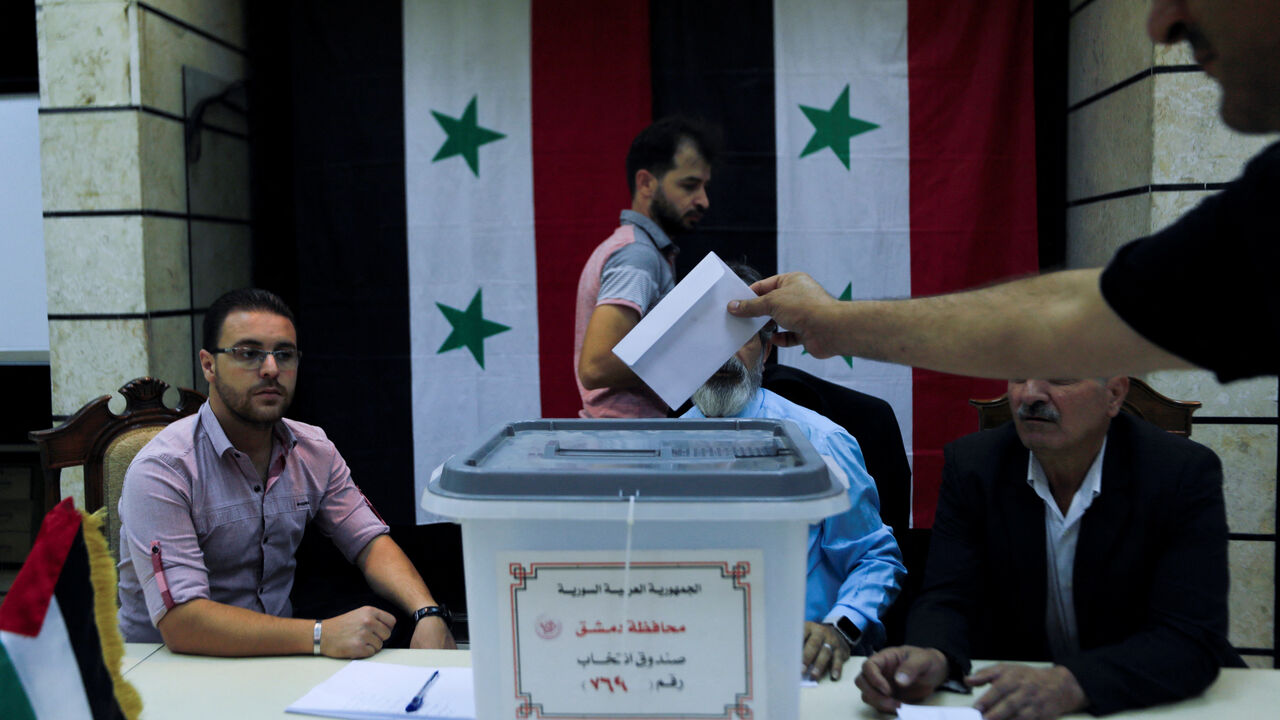
Syria has announced that elections in the provinces of Sweida, Hasaka, and Raqqa will be postponed while the rest of the country votes for a new parliament in September.
The government stated that ballots cannot be held in these areas until conditions are considered safe.
Sweida, in southern Syria, is mainly Druze, and has been experiencing ongoing clashes between Druze militias and Sunni Bedouin tribes over land and resources.
These tensions have led to hundreds of deaths in recent months. Israel carried out airstrikes, claiming they were aimed at preventing a mass killing of Druze residents.
Many local Druze citizens have protested in favor of national unity and against separatist calls from armed groups in the province.
Hasaka and parts of Raqqa are partially controlled by the Kurdish-led Syrian Democratic Forces (SDF). The Syrian government says that elections can only take place in areas fully under its control.
Attempts to integrate Kurdish-led institutions into the central government have been delayed due to a tense standoff between the SDF and the new administration.
The national parliamentary elections are scheduled for September 15 to 20 and will be the first since Ahmed al-Sharaa’s Islamist government came to power after leading a rebel alliance that ousted former President Bashar Assad in December.
Sharaa dissolved the previous parliament in January and introduced an interim constitution in March outlining a five-year political transition.
Under the new system, Sharaa can appoint one-third of the 210 parliamentary seats, while local bodies select the remaining members.
Since taking office, he has worked to gain international political and business support for rebuilding Syria, which has been devastated by over a decade of civil war.
Critics, however, warn that the interim constitution concentrates too much power in the hands of Sharaa and does not adequately reflect the country’s ethnic and religious diversity.
The postponement of elections in Sweida, Hasaka, and Raqqa underscores the ongoing security and political challenges faced by Syria, signaling that nationwide voting will remain incomplete until stability is restored in these contested regions.