
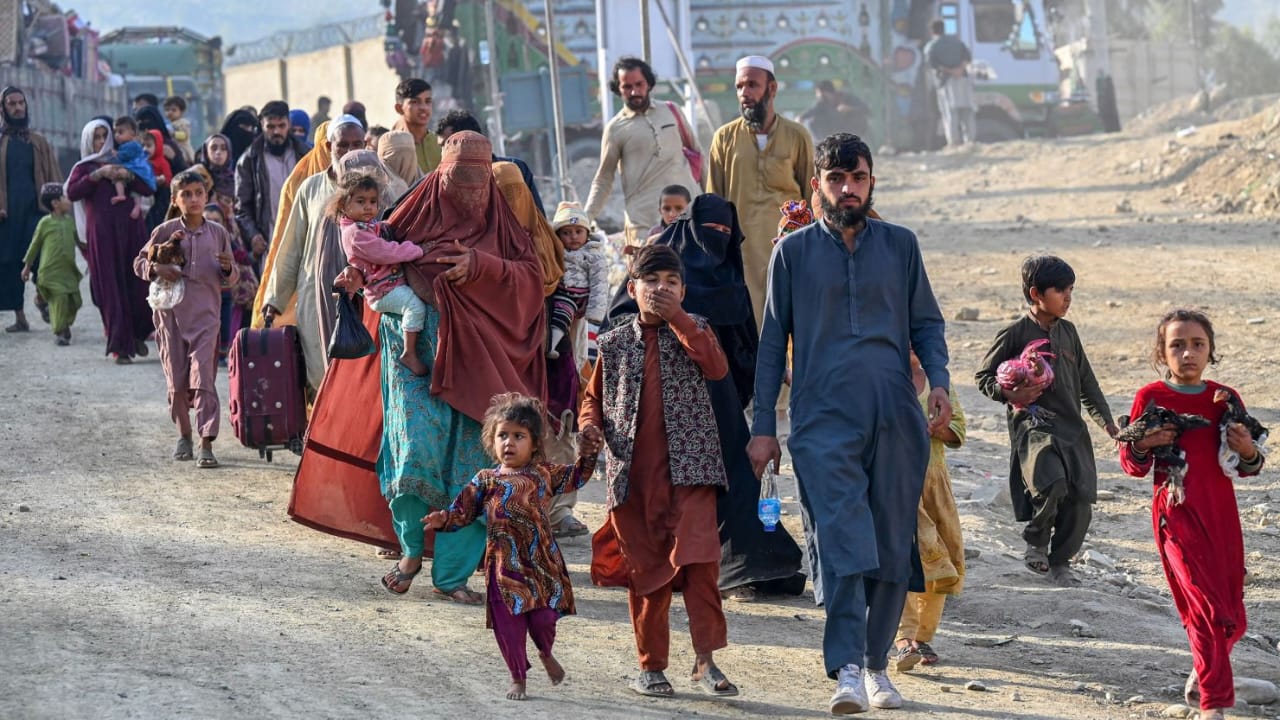
The Taliban administration has raised concerns over the ongoing deportation of Afghan nationals from neighboring countries, calling the situation unprecedented in the country’s history.
Iran and Pakistan have recently intensified efforts to remove foreign residents they claim are staying illegally.
Both countries have set strict deadlines and warned of arrests or forced returns, though they deny specifically targeting Afghans.
In a press briefing held in Kabul, the Taliban’s refugee ministry criticized the forced return of Afghans, describing it as deeply troubling.
Officials said these actions violate international agreements, basic human rights, and shared regional values.
Figures from the Taliban-led Ministry of Refugees and Repatriation show that nearly 1.8 million Afghans have been expelled from Iran in just three months.
Pakistan has deported over 184,000 since the start of the year, while Turkey has returned more than 5,000. Around 10,000 Afghan prisoners, mostly held in Pakistan, have also been sent back.
The ministry stated that roughly six million Afghan refugees are still living abroad, many of them facing uncertainty.
Inside the country, environmental challenges such as droughts, floods, and severe weather have displaced an additional 13,500 families.
With earlier displacements included, the total number of internally displaced families has grown to nearly 2.5 million.
Authorities plan to send representatives to hold discussions with host countries, aiming to improve the legal situation of Afghan refugees and address ongoing issues.
They hope to work on long-term solutions through peaceful talks and cooperation.
Meanwhile, aid organizations warn that the sudden return of such large numbers of people is placing enormous strain on already weak infrastructure and support networks in Afghanistan.