
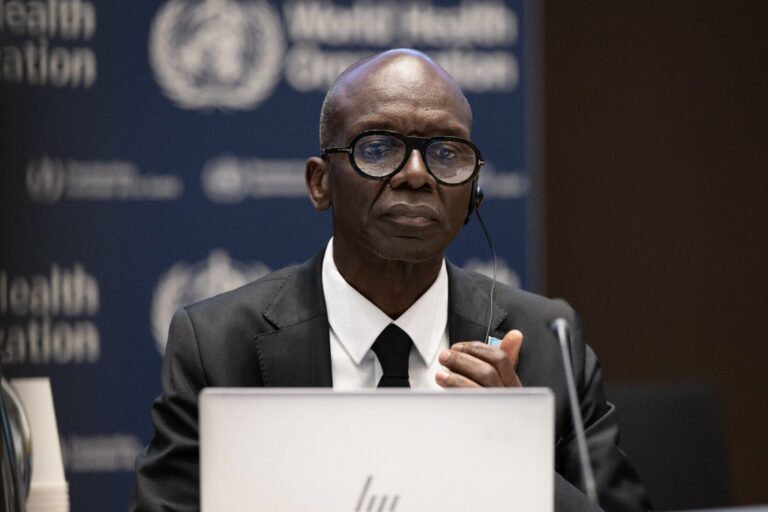
A Tanzanian medical professor has been chosen to lead the World Health Organization’s operations in Africa.
Professor Mohamed Janabi was elected as the new Regional Director during a special session in Geneva, just before the annual World Health Assembly.
His appointment comes after Dr. Chikwe Ihekweazu stepped down as acting regional director. Ihekweazu had been filling the role since February 2025, following the sudden passing of Dr. Faustine Engelbert Ndugulile, who was elected just months earlier in August 2024.
Professor Janabi brings decades of experience to the position. Born in December 1962, he has served as a key health advisor to Tanzanian President Samia Suluhu Hassan. He also leads the Muhimbili National Hospital in Tanzania and previously directed the Jakaya Kikwete Cardiac Institute.
He has studied and worked internationally, with advanced training in Japan, Australia, and Ukraine. Janabi holds a PhD in Cardiology from Osaka University, a Master’s degree in Tropical Health from Australia, and a medical degree from Ukraine. He is also a professor in both Tanzanian and American universities.
Janabi’s plan for his new role focuses on making healthcare in Africa more accessible and resilient. He aims to improve care for mothers and children, tackle both infectious and non-infectious diseases, and strengthen basic health services. He also wants to prepare African health systems for climate-related challenges, encourage medical research, and push for stronger health funding from within the continent.
Aside from medicine, Janabi is also known for his love of sports. He served on the board of Simba Sports Club until mid-2024, helping the team climb the African football rankings. Currently, he chairs the anti-doping committee for the 2027 Africa Cup of Nations, which will be hosted by East Africa.
Global health leaders have welcomed his appointment. WHO Director-General Dr. Tedros Ghebreyesus praised Janabi’s election, expressing support for his leadership. WHO Nigeria’s representative also congratulated him and pledged collaboration under his direction.
With this election, Janabi becomes a key figure in shaping the future of health across the continent. His new position puts him at the center of efforts to improve medical care, manage disease outbreaks, and guide long-term health strategies for Africa’s 47 member states.