
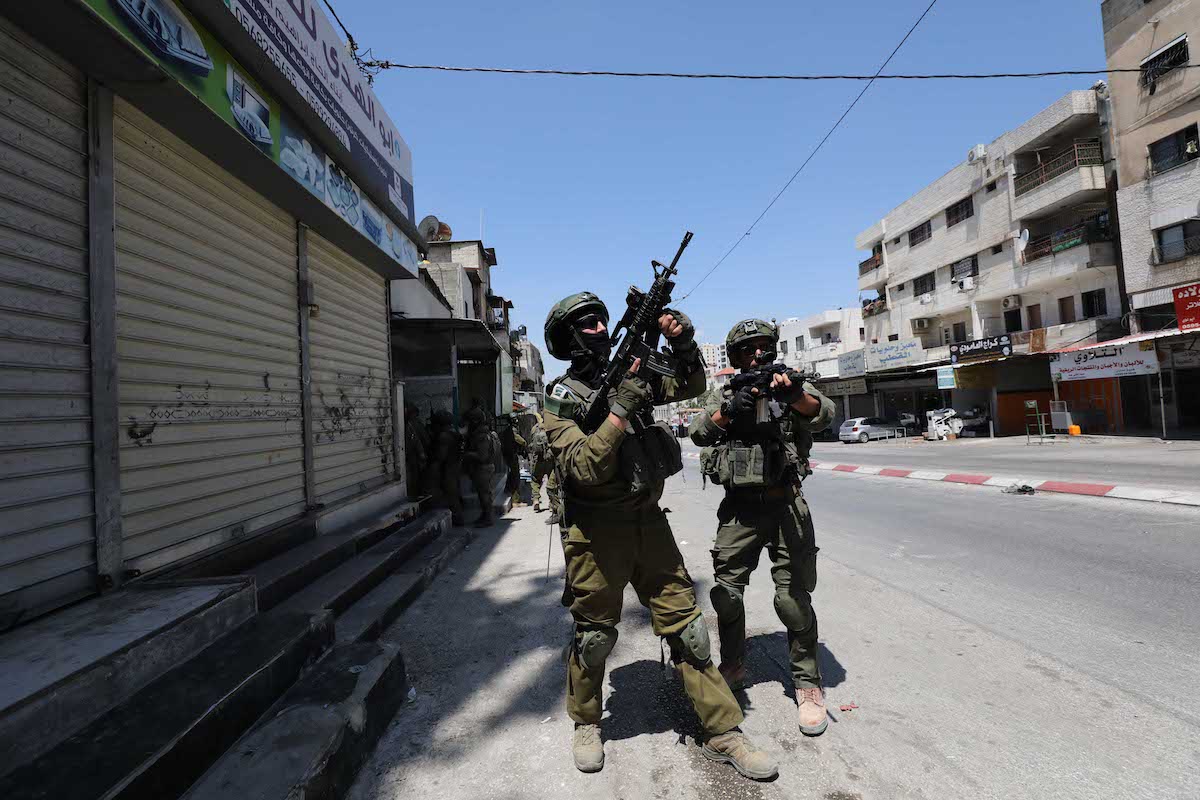
The Israeli military has placed the Palestinian village of Beita, located in the southern part of Nablus in the occupied West Bank, under full closure following a roadside bombing that left two Israeli soldiers injured, one of them seriously.
The incident occurred during a routine patrol by Israeli forces from the 9221st reserve battalion of the Ephraim Brigade. A military vehicle was struck by an explosive device near the village, prompting the Israeli army to respond with a sweeping lockdown and large-scale military presence.
Following the attack, all roads leading in and out of Beita were blocked, effectively isolating the village from surrounding areas. Israeli troops then entered the village in large numbers, reportedly firing at residential homes and targeting water tanks. The operation escalated into house-to-house searches, with soldiers allegedly damaging private property and local infrastructure.
Residents reported that the village’s elementary school for girls was raided during the incursion. School administrative offices were ransacked, and surveillance cameras were taken by the soldiers. Locals described the searches as aggressive, with personal belongings destroyed and public facilities left in disarray.
This latest military action adds to the growing tensions in the region, where clashes between Israeli forces and Palestinians have intensified in recent months. Beita has been the site of repeated confrontations, particularly due to its proximity to contested areas and settlement activity.
The Israeli military has not provided additional details about the condition of the injured soldiers or whether any arrests have been made in connection with the bombing. Meanwhile, the complete closure of Beita remains in effect, raising concerns among human rights organizations about the humanitarian impact on residents, especially with the destruction of water infrastructure and disruption of public services.
As the situation develops, the people of Beita continue to face a heavy military presence, uncertain of when they will regain access to their homes, schools, and essential resources.