
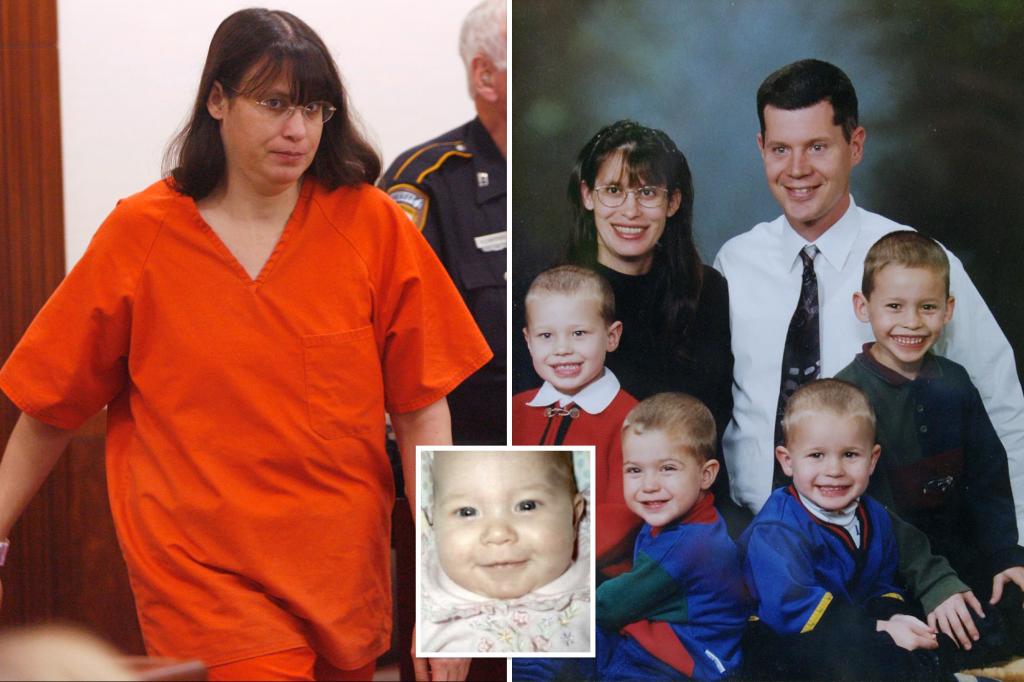
In June 2001, a disturbing case shocked the community of Clear Lake City, a quiet suburb in Houston, Texas.
Andrea Yates, a mother of five, drowned her children in the bathtub of her family home. The tragic event took place shortly after her husband left for work, unaware of the dark thoughts overtaking his wife’s mind. One of the children, her eldest son, tried to run, but she caught him before finishing what she had planned. She laid their bodies gently on the bed after the act and then called emergency services to report what she had done.
The tragedy happened inside a typical family home that had once been filled with the sounds of children. Yates, once a nurse, had been living there with her husband, Rusty, a NASA engineer, and their five kids—Noah, John, Paul, Luke, and baby Mary. On the morning of the crime, Andrea waited until she was alone before beginning to carry out the killings, one child at a time. Afterward, she made multiple calls—first to 911, then to her husband—revealing the horror that had taken place inside the house.
The reason behind this heartbreaking act was traced back to serious mental illness. Yates had a long history of psychiatric struggles, including postpartum psychosis and schizophrenia. Experts later explained that she had been suffering from delusions that led her to believe her children were in danger of spiritual harm. She believed that taking their lives would save them from what she saw as a terrible fate. Her mental condition had worsened following the birth of her youngest child, and signs of deep psychological distress had been present for months.
Yates was initially convicted of capital murder and sentenced to life in prison. However, her defense team appealed the verdict, arguing that she was not in a sound state of mind at the time of the killings. In a second trial held in 2006, a jury found her not guilty by reason of insanity. She was then committed to Kerrville State Hospital in Texas, where she has remained for the past 17 years.
Over time, Yates has reportedly made progress in the hospital. Those close to her say she has found a sense of calm in the structured environment, surrounded by mental health professionals. Her attorney shared that she is doing as well as can be expected and that she prefers to stay in the hospital where she feels safe and stable. Though divorced, she still speaks with her ex-husband occasionally. He has since remarried and moved on with his life, while Yates has stayed in the place she now calls home.
The long-term future for Andrea Yates remains unclear. While she is technically eligible for release if found no longer a threat, there is no push for that outcome. Those familiar with the case say she may remain in care for life. The events of that day in 2001 continue to serve as a painful reminder of the importance of mental health support, especially for mothers struggling after childbirth.