
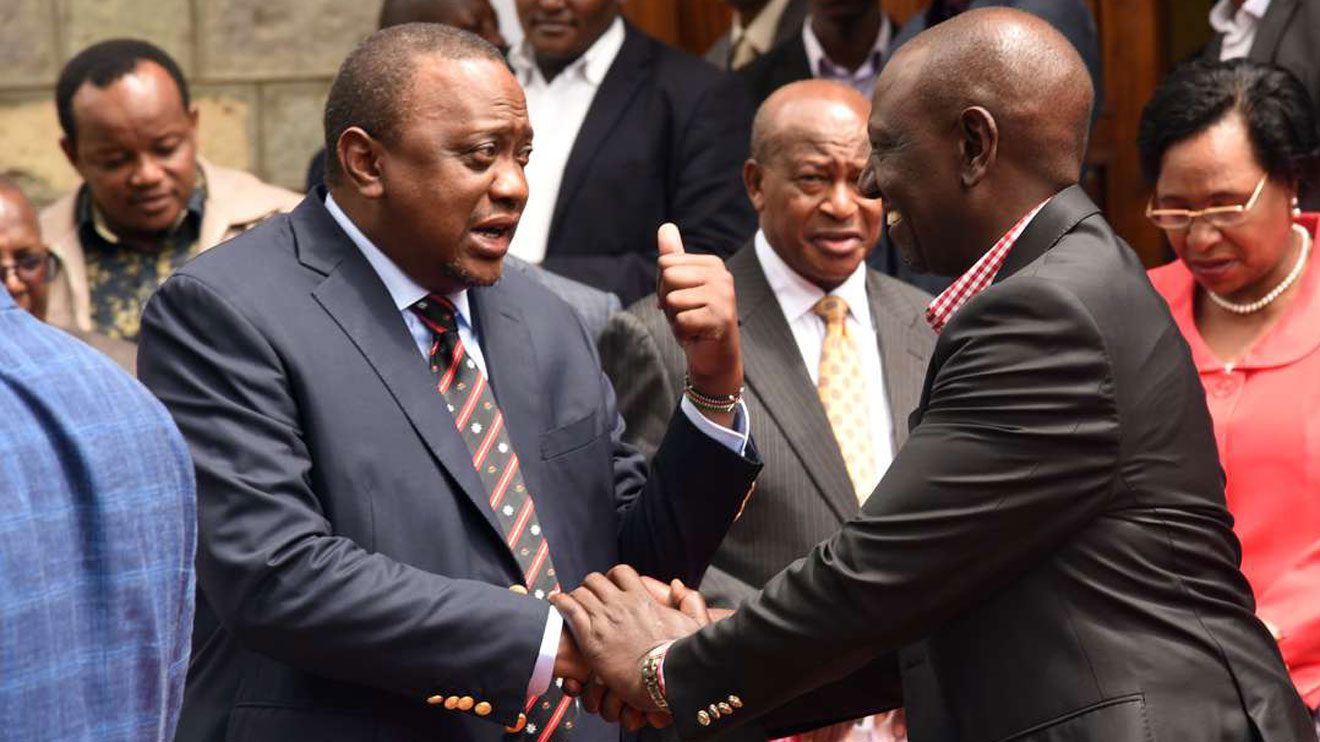
Kenyan politics has seen major shifts with key alliances shaping the country’s leadership.
Raila Odinga has been at the center of these changes, building relationships that have influenced his position. Two major handshakes, one with former President Uhuru Kenyatta and another with President William Ruto, have played a role in his political journey.
The handshake between Raila and Uhuru in 2018 was a defining moment. It ended a period of intense political rivalry and created a working relationship between the two leaders. This move gave Raila a new level of influence in government, with his allies securing strategic positions and shaping policies. The agreement also brought stability after a divisive election, allowing Raila to position himself as a national leader rather than just an opposition figure.
The more recent interactions between Raila and Ruto have added another layer to Kenya’s political landscape. While their relationship has been less formal, talks and gestures of cooperation have sparked speculation. Ruto’s leadership has challenged Raila’s traditional support base, and any alignment between them could reshape future elections. However, it remains uncertain whether this will give Raila more power or limit his influence.
These political agreements have been driven by strategy rather than ideology. Both handshakes served as survival tactics for the leaders involved, allowing them to stay relevant in an ever-changing political environment. Each move has come with opportunities and risks, as alliances in Kenya can shift quickly based on interests rather than long-term commitments.
As the country moves toward the next election cycle, the impact of these handshakes will become clearer. Raila’s position in Kenyan politics continues to evolve, and his alliances will determine whether he maintains his influence or faces new challenges in the race for power.