
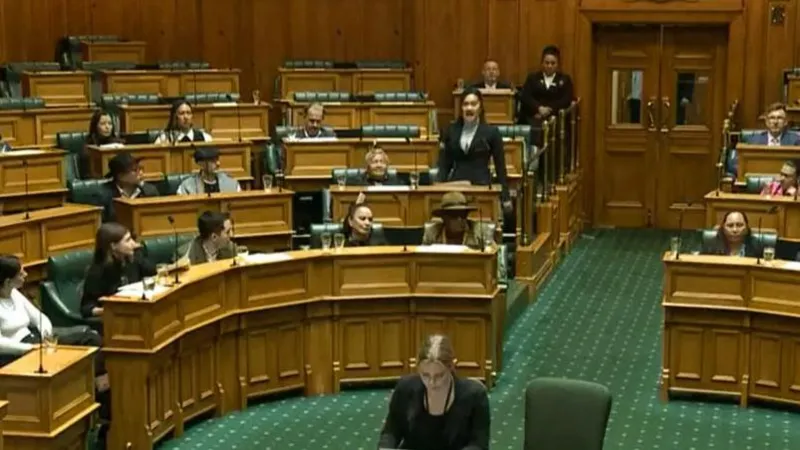
Three Māori Members of Parliament in New Zealand may be suspended for performing a haka during a parliamentary session—an act a committee has ruled could have been “intimidating” to other lawmakers.
The protest took place last year when Hana-Rawhiti Maipi-Clarke, a Māori opposition MP, performed the traditional Māori dance in protest of the controversial Treaty Principles Bill, which aimed to redefine the Treaty of Waitangi—the country’s founding agreement between the British Crown and Māori chiefs.
The parliamentary committee has recommended that Maipi-Clarke be suspended for one week, and Māori Party co-leaders Rawiri Waititi and Debbie Ngarewa-Packer be suspended for 21 days. Their fate will be decided by a parliamentary vote scheduled for Tuesday.
The Māori Party has condemned the move, calling it a politically motivated “warning shot” and an attempt to suppress indigenous resistance. “When tangata whenua resist, colonial powers reach for the maximum penalty,” the party said, calling the sanctions among the harshest ever proposed in New Zealand’s parliamentary history.
Deputy Prime Minister Winston Peters, who is also Māori, criticized the trio, labeling them “out-of-control MPs who flout the rules and intimidate others with outrageous hakas.”
The Treaty Principles Bill, which was eventually voted down by a wide margin (112 to 11), sparked major protests across the country. Critics feared the bill would undermine Māori rights and obligations enshrined in the 1840 Treaty of Waitangi. The Act Party, which sponsored the bill, argued that the Treaty’s principles need legal clarity, claiming current interpretations divide New Zealand by race.
Public reaction to the bill was overwhelmingly negative, with over 40,000 protesters gathering outside parliament during its first reading and thousands more joining a nine-day nationwide protest march.
During that session, Maipi-Clarke tore up a copy of the bill as she began her haka protest. While the bill is now dead, the disciplinary action against the MPs has reignited debate over indigenous rights, freedom of expression in parliament, and the cultural place of Māori traditions in modern governance.