
A tense phone call between Donald Trump and Jeff Bezos has stirred fresh controversy after Amazon was reported to be considering a move that could reveal the direct impact of US tariffs on product prices.
The White House accused Amazon of making a politically charged decision, while the retail giant rushed to contain the fallout.
Reports emerged that Amazon’s discount store, Haul, was discussing the idea of showing customers how much tariffs were adding to the cost of their orders. The news sparked strong backlash from the Trump administration, which interpreted the potential pricing move as an effort to publicly challenge the president’s trade policies.
The call between Trump and Bezos quickly turned heated. A source close to the administration described the conversation as blunt and aggressive, suggesting the president used harsh language toward the Amazon founder. Although tensions flared, Trump later downplayed the dispute, telling reporters the matter had been resolved and calling Bezos a “good guy.”
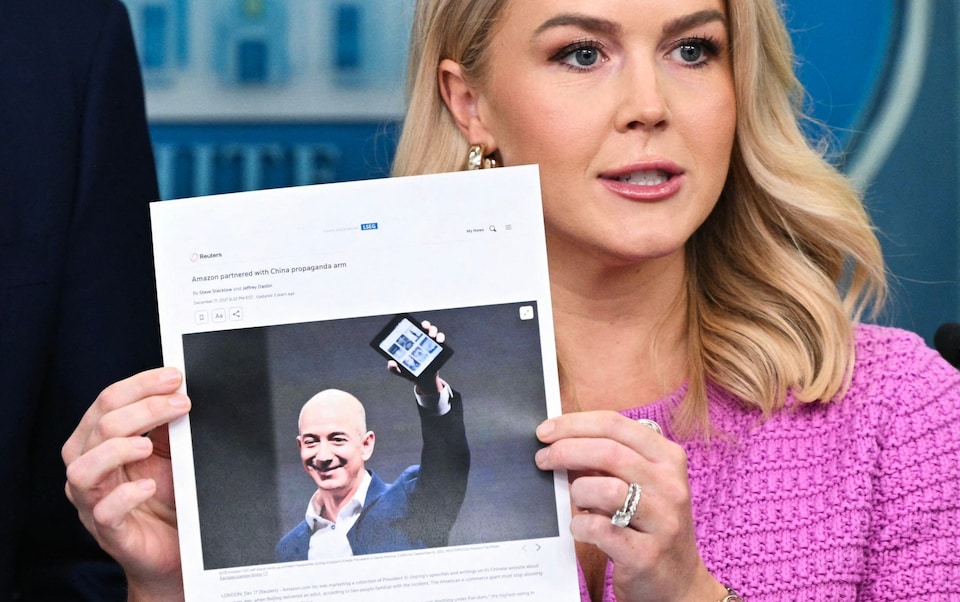
White House Press Secretary Karoline Leavitt voiced strong criticism of Amazon, questioning why similar actions were not taken during the previous administration under Joe Biden, when inflation hit a four-decade high. She described the pricing idea as anti-American and accused Amazon of aligning itself with foreign interests. In a dramatic moment at a press briefing, she pointed to an old Reuters article suggesting Amazon had cooperated with China to filter certain content and sell pro-Beijing literature.
In response, Amazon said the plan to show tariff costs was only briefly discussed for Haul, its budget platform, and that no changes had been implemented on its main site or approved by executives. The company clarified that internal teams often explore ideas that never move forward and denied any political motive behind the discussion.
Despite the official denial, the row nearly disrupted the relationship that had been quietly developing between Trump and Bezos. The Amazon founder, who once kept his distance from Trump, has recently taken steps to improve their rapport. He even instructed The Washington Post, which he owns, to pull back from endorsing presidential candidates, a move many interpreted as favorable to Trump’s political interests.
Analysts have suggested that if Amazon were to openly display the effects of tariffs, it could lead consumers to associate higher prices with White House policy rather than the retailer’s pricing decisions. Data from the research group SmartScout showed that prices for hundreds of Amazon products have already climbed by around 30 percent this month, affecting items from phone accessories to women’s clothing.
Amazon CEO Andy Jassy previously told CNBC that he expects manufacturers to pass on higher costs as a result of the tariffs. While Amazon insists no final decision was made, the reaction from Washington reveals just how sensitive the administration is to any move that might shift public attention to the economic impact of its trade strategy.
For now, it appears the crisis has been defused. But the episode underscores the delicate balance between politics and big business in an election year—and how even the idea of price transparency can ignite a firestorm when it touches on policy, power, and public opinion.