
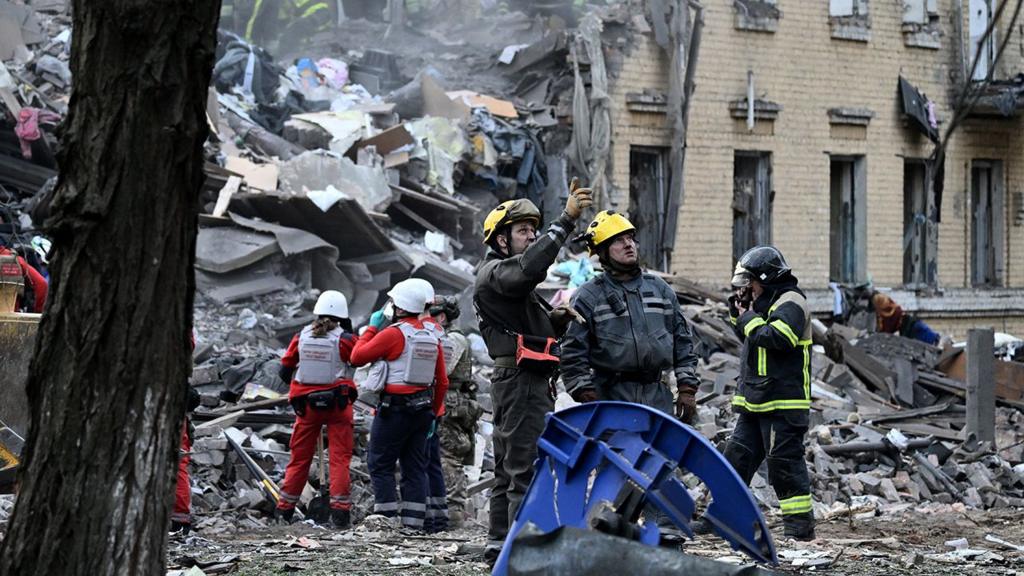
Twelve people have been killed and dozens more injured after Russian airstrikes hit Ukraine’s capital, Kyiv, in one of the deadliest attacks on the city since last July.
The strikes, which began overnight, have drawn international reaction, including a sharp response from US President Donald Trump.
The incident unfolded as explosions tore through residential areas in Kyiv, leaving streets covered in rubble and emergency workers searching for survivors. Ukraine’s interior ministry confirmed the rising death toll after more bodies were recovered from the debris. Over 90 people were reported injured in the attacks.
The US President reacted on social media, calling the strikes “very bad timing” and expressing frustration over the rising number of casualties. In an unusually direct message, he urged Russian President Vladimir Putin to stop the assault and move forward with a peace agreement, warning that thousands of soldiers are dying every week.
Just a day earlier, Trump had taken a different tone. He criticized Ukrainian President Volodymyr Zelensky, blaming him for holding up peace talks by refusing to accept Russia’s control over Crimea—a stance Trump believes could help fast-track negotiations. But the deadly strikes seem to have shifted his attention back to Moscow, at least for now.
The timing of the attack disrupted President Zelensky’s visit to South Africa, where he was meeting with President Ramaphosa. Zelensky had to cut the trip short and return to Ukraine, calling for more international pressure on Russia to halt its aggression.
The Kremlin, meanwhile, defended its actions, claiming the strikes were aimed at Ukrainian military infrastructure and asserting that the mission had been successful. However, visuals from the capital told a different story—wounded civilians, shattered apartment blocks, and shaken survivors trying to make sense of the destruction.
Back in Washington, Trump’s administration is under pressure to take stronger action. While the US has several economic tools at its disposal—such as increasing sanctions on Russian oil buyers or boosting military support for Ukraine—none have been rolled out in response to the latest violence. Despite the President’s public anger, critics argue that real consequences for Moscow have yet to follow.
Inside the White House, there appears to be disagreement over who is responsible for the lack of progress in peace efforts. Trump’s press secretary said frustration is growing and placed much of the blame on Zelensky’s unwillingness to compromise. But with the situation on the ground worsening, the calls for a more balanced and urgent US approach are getting louder.
As Trump nears the 100-day mark of his presidency, his promise to end the war on “day one” remains far from reality. The latest escalation in Kyiv has reignited fears that peace is still a distant goal and highlighted the fragile and unpredictable nature of diplomacy in a war that shows no signs of slowing down.