
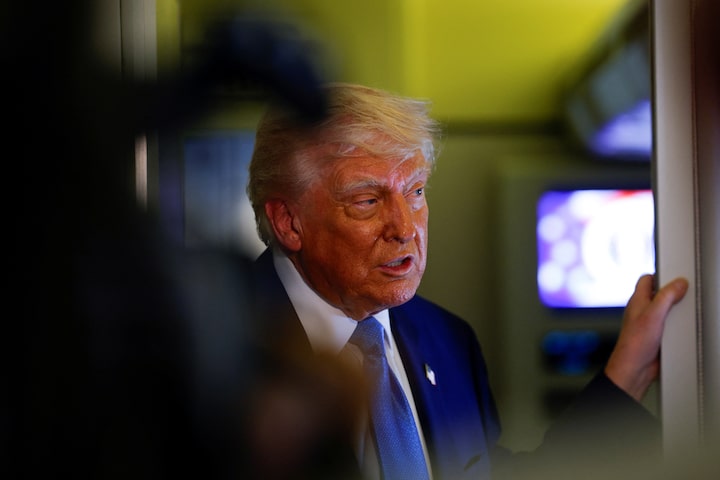
U.S. President Donald Trump has made a bold claim following his recent tour across the Middle East, stating that the visit could generate nearly 10 trillion U.S. dollars in economic agreements.
The trip, which included high-level meetings in key Gulf nations, focused on trade, energy, infrastructure, and defense cooperation.
According to Trump, the potential value of the deals under discussion spans multiple sectors and involves both government and private stakeholders from countries such as Qatar, the United Arab Emirates, and Saudi Arabia. While specific agreements have not been publicly confirmed, Trump described the tour as a major step toward reshaping U.S. engagement in the region.
The visit notably excluded Israel, prompting speculation about shifting diplomatic strategies. However, Trump defended his approach, saying the discussions were designed to support regional stability and unlock long-term business opportunities that benefit all sides.
Some of the proposed partnerships are reportedly centered on energy exports, advanced technology sharing, and large-scale construction and logistics projects, with the possibility of American companies taking the lead on implementation.
While critics question the feasibility and scale of the 10 trillion dollar figure, Trump’s allies argue that the region’s vast sovereign wealth and appetite for foreign investment make the goal achievable over time.
The president’s remarks have stirred conversation in global financial circles, whether the ambitious claims materialize into firm agreements remains to be seen, but the announcement has certainly reignited interest in America’s evolving economic footprint in the Middle East.