
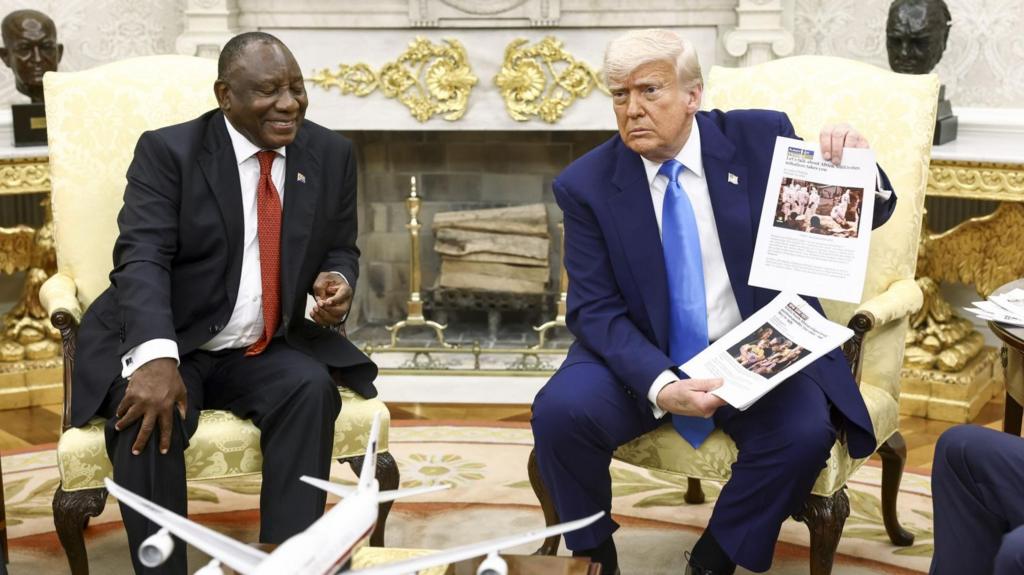
President Donald Trump stunned observers on Tuesday with a confrontational exchange in the Oval Office, where he accused South African President Cyril Ramaphosa of turning a blind eye to violence against white farmers.
Trump aired controversial footage, including chants of “Kill the Boer, kill the farmer,” alleging that white South Africans are facing persecution and are fleeing the country.
The incident marked a sharp departure from the typical diplomatic tone expected in such meetings. Trump’s remarks echoed previously debunked claims of a “white genocide” in South Africa — a narrative frequently promoted by far-right groups but discredited by human rights organizations and South Africa’s own crime statistics.
President Ramaphosa, clearly blindsided by the ambush, remained composed. He strongly condemned the offensive chants, calling them unacceptable but emphasized that they do not represent government policy or the broader South African population. Ramaphosa reiterated South Africa’s commitment to racial reconciliation, invoking the legacy of Nelson Mandela.
In a strategic move, Ramaphosa deferred a pointed question about white farmers to Agriculture Minister John Steenhuisen — who is white — allowing him to clarify that most farmers, regardless of race, are victims of general criminal violence and that most white farmers do not want to leave the country.
The Oval Office clash drew comparisons to Trump’s earlier tense meeting with Ukrainian President Volodymyr Zelensky, although Ramaphosa appeared to handle the ambush with more poise, avoiding a public shouting match.
Trump’s remarks may have domestic political appeal to his base, but the episode risked straining U.S.-South Africa relations. The meeting had originally been expected to focus on trade and cooperation, especially as South Africa prepares to host the G20 summit later this year.
When asked if he would attend the G20 in South Africa, Trump dismissed the group’s importance without the U.S., casting further doubt on the future of American leadership in global economic forums.
For South Africa, the visit may not yield the trade deals hoped for, but Ramaphosa’s measured handling of the confrontation may have helped avoid deeper diplomatic fallout.
Meanwhile, reports that 59 white South Africans were granted refugee status in the U.S. are likely to fuel further political debate, especially given the sensitive racial dynamics involved.