
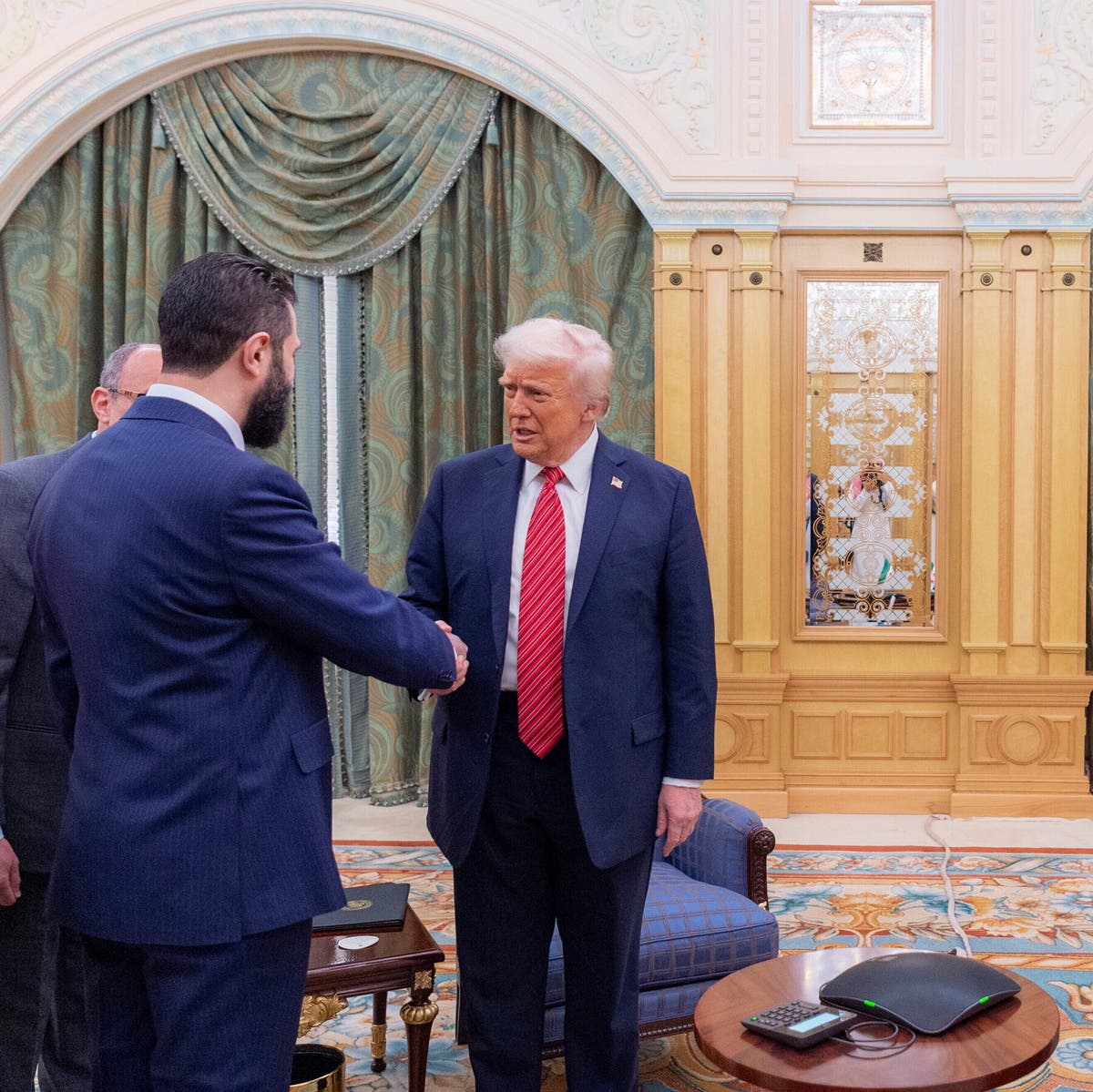
President Donald Trump met with Syrian President Ahmed al-Shara on Wednesday, marking the first high-level contact between the two nations in a quarter-century.
The meeting, held in Riyadh during Trump’s ongoing tour of the Middle East, followed his announcement that the United States would lift sanctions on Syria—a dramatic move that signals a fresh direction in American foreign policy.
Al-Shara, once a commander of a militant group linked to Al Qaeda, rose to power after his rebel coalition overthrew longtime Syrian leader Bashar al-Assad in December. Since then, he has worked to rebrand his image and push for economic recovery in a war-torn nation still grappling with years of conflict and isolation.
The meeting was arranged by Saudi Crown Prince Mohammed bin Salman and also included remote participation by Turkish President Recep Tayyip Erdogan, who supported the anti-Assad rebellion. Trump reportedly encouraged al-Shara to open dialogue with Israel and to expel foreign militants from Syria, according to a White House briefing.
While Trump praised the new Syrian leader and expressed optimism about regional stability, the timing of the visit stirred controversy. Just hours before the meeting, Israeli airstrikes in Gaza killed dozens of Palestinians, highlighting the volatility in nearby areas. Critics say Trump’s focus on state visits and business ties in the Gulf is overshadowing urgent crises elsewhere in the region.
The U.S. decision to drop sanctions was met with applause by Middle Eastern dignitaries in Riyadh. Syria’s government hopes the lifting of restrictions will attract investment and aid to help rebuild devastated infrastructure. However, skeptics warn that too swift a normalization could ignore the complexities of Syria’s recent past and its human rights record.
Trump’s Mideast trip, which includes stops in Saudi Arabia, Qatar, and the United Arab Emirates, has featured lavish ceremonies and business-oriented engagements. In Qatar, Trump is expected to attend a World Cup handover ceremony with FIFA President Gianni Infantino. Qatar hosted the 2022 tournament and will symbolically pass the responsibility to the United States, which will co-host the 2026 edition.
Trump’s personal ties with Gulf leaders continue to shape his diplomatic approach. He has developed close relationships with Crown Prince Mohammed bin Salman and Sheikh Mohammed bin Zayed of the UAE, often praising their leadership while avoiding criticism of their domestic policies.
As Trump’s Middle East tour continues, his meeting with Syria’s new leader may mark the start of a new chapter in regional diplomacy—but it also raises questions about the direction of U.S. strategy in a region still plagued by instability and mistrust.