
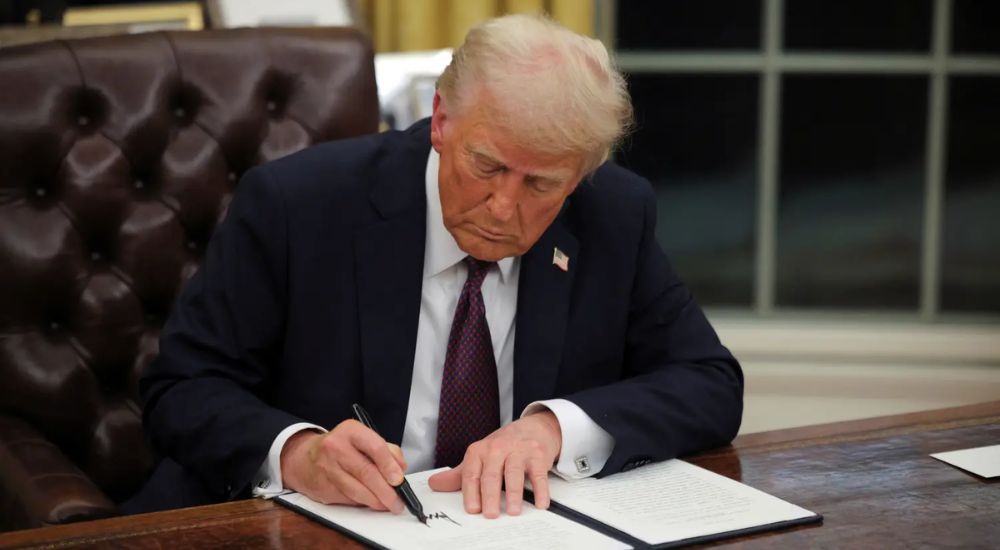
President Donald Trump has signed an executive order aimed at dismantling the US Department of Education, a move that aligns with his long-standing push to reduce federal control over schools.
The order directs Education Secretary Linda McMahon to begin shifting responsibilities to state governments, although fully eliminating the department would require congressional approval.
The White House emphasized that key programs like student loans and Pell Grants will remain under federal oversight, but the department’s influence will be significantly reduced. Press Secretary Karoline Leavitt stated that the administration is committed to giving states more control over their education systems and removing what it sees as excessive federal interference.
The decision comes amid growing dissatisfaction with national education policies, particularly regarding school closures during the COVID-19 pandemic and curriculum debates. Critics argue that the federal government has overstepped its role, leading to increased bureaucracy and unnecessary spending. Trump has suggested that agencies like the Small Business Administration could take over student loan management, though no clear plan has been finalized for handling the department’s massive $1.8 trillion student debt portfolio.
As part of the restructuring, nearly half of the department’s workforce has been notified of possible layoffs. Some programs, especially those focused on diversity and civil rights, have been suspended. Employees impacted by the cuts were instructed to collect their belongings within a strict time frame, with some describing the process as abrupt and unfair.
The move has sparked backlash from teachers’ unions and education advocates, who warn that reducing the department’s role could harm students, increase class sizes, and limit access to higher education. National Education Association President Becky Pringle criticized the decision, calling it an attack on public education that prioritizes the wealthy over students and teachers.
Despite Trump’s push, legal and political challenges could slow or block the effort. Opponents are expected to take the fight to Congress and the courts, arguing that dismantling the department would disrupt essential services and create long-term consequences for the nation’s education system.