
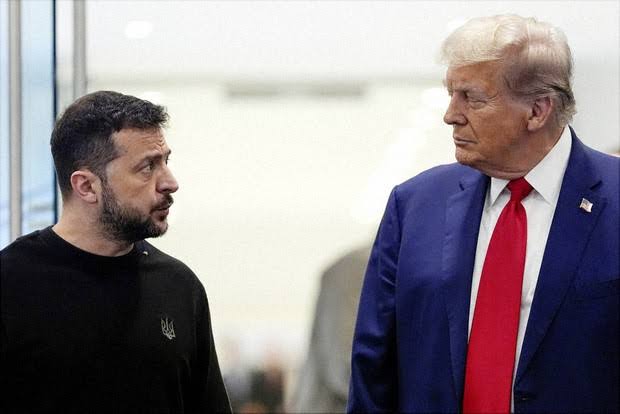
Reports suggest that during a phone call on July 4, U.S. President Donald Trump asked Ukrainian President Volodymyr Zelensky whether Ukraine could potentially launch attacks on major Russian cities, including Moscow and St. Petersburg, if given the necessary weapons.
The discussion reportedly came after Trump held a separate, tense conversation with Russian President Vladimir Putin.
While some sources claim Trump privately pushed for stronger action, he later stated that the U.S. had no intention of providing weapons capable of hitting deep into Russian territory.
The White House responded to media reports by saying Trump’s comments were being misrepresented.
At the same time, European Union foreign ministers met in Brussels to review their support for Ukraine and consider tighter sanctions on Russia.
Their goal was to finalize an 18th package of sanctions, but Slovakia blocked progress. The country raised concerns over its energy needs, specifically a deal to continue receiving Russian gas until 2034.
Although the package wasn’t approved, EU officials indicated that discussions would continue and a resolution could be reached soon.
The delay shows ongoing differences among EU members about how to handle economic pressure on Russia while balancing national interests.
As global tensions remain, the U.S. appears to be weighing how far to go in its support for Ukraine, especially regarding the use of advanced weapons.
Meanwhile, European leaders are still trying to align their positions and take a stronger, unified stance in response to the conflict.