
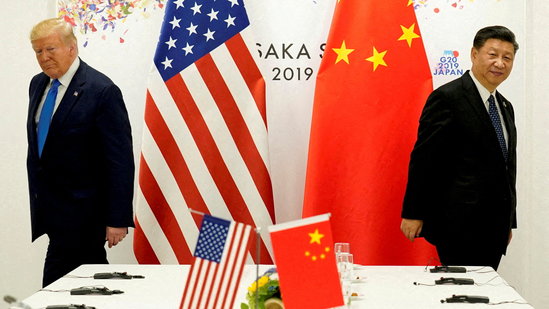
President Donald Trump has introduced a steep new tariff policy targeting Chinese imports, raising rates up to 245%.
This move marks a sharp turn in the ongoing trade dispute between the United States and China, and is part of what Trump describes as his broader effort to protect American industry and supply chains.
The White House announced the decision following China’s recent actions to restrict exports of crucial materials. These include gallium, germanium, and antimony—resources used in military systems, aerospace equipment, and semiconductor production. Just days before the tariff hike, China had also suspended exports of heavy rare earth metals and magnets, which are vital for sectors like automobile manufacturing and defense technology.
The US administration views these restrictions as an aggressive attempt by China to control global supply lines, prompting Washington to respond with elevated tariffs. Trump’s economic team says this strategy is aligned with the president’s “America First” approach, which aims to secure domestic production and reduce dependency on foreign sources, especially in strategic industries.
China had recently increased tariffs on US products to as high as 125%, fueling a tit-for-tat exchange that has unsettled global markets. In response, Trump raised existing duties on Chinese goods to 145%, and with this new move, pushed some tariffs to 245%. Other countries remain temporarily exempt from similar increases as the US continues trade negotiations with them. According to the White House, over 75 countries have expressed interest in striking new deals.
Beyond the tariffs, the Trump administration has also opened a national security investigation focused on the import of materials that are essential for advanced manufacturing. Officials say this is a precautionary step to assess vulnerabilities in America’s industrial base.
While the full list of affected Chinese products has not been made public, analysts expect a broad impact across industries. Both consumer goods and industrial supplies are likely to face higher prices as a result.
China, meanwhile, has outlined its own expectations before resuming talks with the US. According to reports, Beijing is asking for more respectful rhetoric from Washington, a consistent policy approach, and an American negotiator with direct backing from President Trump. China also wants to address issues such as US sanctions and the political status of Taiwan before moving forward.
As the trade conflict deepens, the world will be watching to see whether the two major economies can reach common ground—or whether more economic friction lies ahead.