
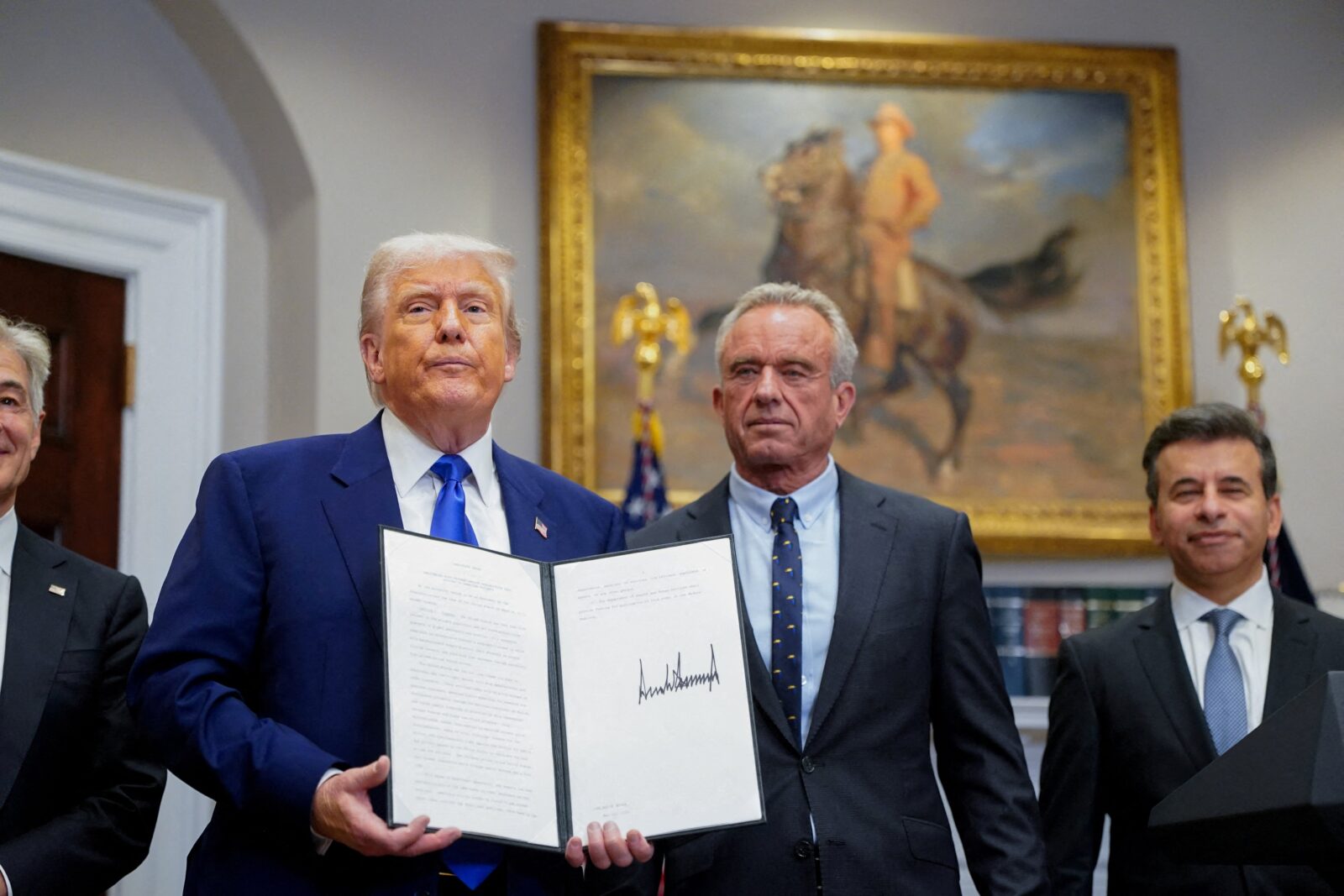
President Donald Trump signed an executive order on May 12 aimed at reducing the high cost of prescription drugs in the United States.
The order calls on pharmaceutical companies to lower their prices to match what other wealthy countries pay for the same medications. Trump said the move would ensure Americans are no longer charged more than people in Europe and elsewhere for the same treatments.
The order introduces what’s called a “most favored nation” pricing policy. It sets a 30-day window for drugmakers to voluntarily adjust prices, signaling that if they refuse, further action may follow. The White House has also offered support for U.S. drug companies to charge higher prices overseas to balance any losses. Trump said this is about leveling the playing field for American patients.
Reactions to the order varied. Drug industry leaders pushed back, warning the plan could harm the U.S. economy and reduce investment in new treatments. The CEO of PhRMA, the top lobbying group for drugmakers, argued that copying foreign pricing models could lead to fewer new drugs and jobs. He also claimed that international markets underpay for drugs, leaving Americans to cover the difference.
Supporters of drug pricing reform welcomed the move but urged stronger action. Senator Bernie Sanders, a longtime advocate for lower prescription costs, said Americans are being overcharged compared to other nations. He pointed out that some medications cost up to ten times more in the U.S. than in Europe or Canada. Sanders urged Trump to work with Congress on lasting reforms, warning that an executive order could be challenged in court and may not survive long-term.
A 2024 Senate report highlighted the profits of major drug companies, showing over $112 billion earned in 2022 alone. That same report found that Americans often pay nearly three times more for prescriptions than citizens of other high-income countries. The findings have renewed calls for changes that go beyond temporary executive actions.
Legal experts and some think tanks raised doubts about whether the government has the authority to enforce such pricing changes without new laws. Critics from groups like the Cato Institute argue that federal health agencies can’t set private-sector prices on their own. They believe Congress must act if there is to be any lasting impact.
Religious leaders have also weighed in. The U.S. Conference of Catholic Bishops has supported measures to reduce drug prices, saying it would especially help low-income seniors who struggle with medical costs. They have called for justice and fairness in access to essential healthcare, highlighting the moral stakes of the issue.
As the 30-day countdown begins, the spotlight remains on pharmaceutical companies and whether they will comply. The order may spark legal battles or political fights in Washington, but it has placed renewed attention on a problem millions of Americans face every day — the rising cost of life-saving medicine.