
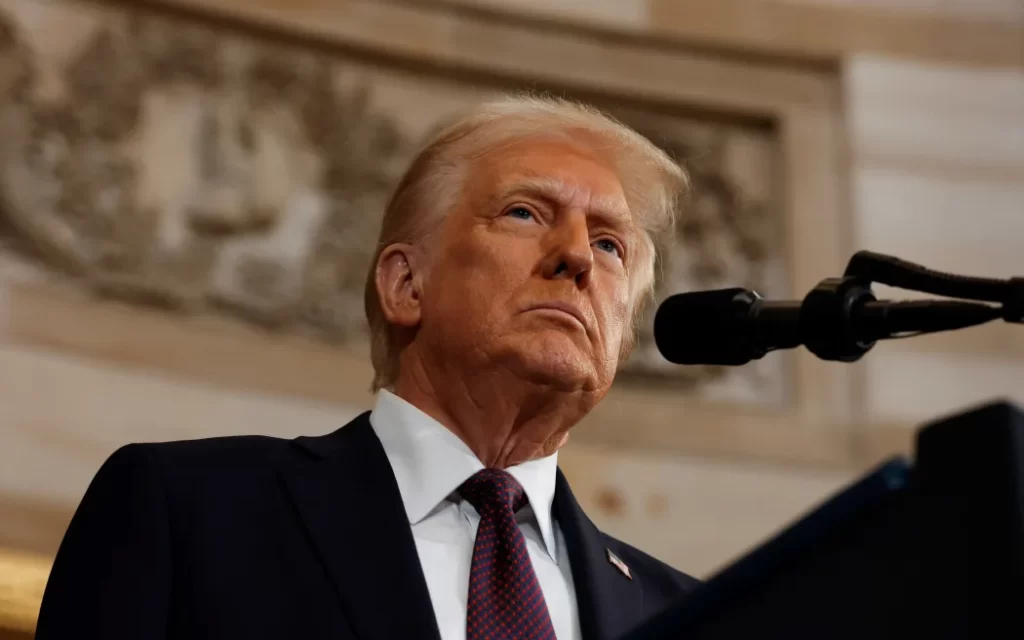
Stock markets in Mexico and Argentina plunged on Friday following fresh US tariffs announced by President Donald Trump, sparking panic across Latin America despite Mexico avoiding direct sanctions.
Mexico’s main stock index fell sharply by 4.87 percent by the end of the day. The drop surprised many investors, as Mexico was not included in the list of countries hit by Trump’s new import duties. However, fears of broader global instability and the ripple effect on trade partners contributed to the downturn. The drop wiped out Thursday’s small gains of 0.54 percent, which had come after initial relief that Mexico had been excluded.
Meanwhile, markets in Argentina took a harder hit. The Merval Index tumbled 7.38 percent following Trump’s announcement on Wednesday that slapped Argentina with a 10 percent tariff. The blow came as part of a wider move that imposed import taxes on dozens of countries, reigniting trade war concerns across global markets.
Brazil, the region’s largest economy, also felt the impact. Its Bovespa Index closed down 2.96 percent. Like Argentina, Brazil was among the Latin American nations included in the US tariffs. The move has raised concerns about the stability of regional trade and investment flows, as investors reassess their positions in emerging markets already facing economic pressure.
The tariffs, which Trump described as a move to reclaim American manufacturing and reduce trade deficits, are being applied on a sliding scale from 10 to 50 percent. While Argentina and Brazil received the lower end of the range, the announcement alone was enough to spark widespread market anxiety.
Analysts say the stock market falls reflect more than just fear of the tariffs themselves. The broader concern lies in the uncertainty surrounding future US trade actions, especially as Trump’s administration continues to apply pressure on foreign governments. Investors are also watching how affected countries will respond, and whether any retaliatory measures will follow.
Despite not being directly hit, Mexico remains vulnerable due to its deep economic ties to the United States. Any slowdown in regional trade or new friction in US-Latin America relations could affect key sectors in Mexico’s export-driven economy.
Market watchers say volatility may continue in the days ahead as the full consequences of the new tariffs become clearer. Investors are now bracing for possible further shocks in global trade policy, and governments in Latin America are likely to seek clarity or negotiation routes to protect their economic interests.