
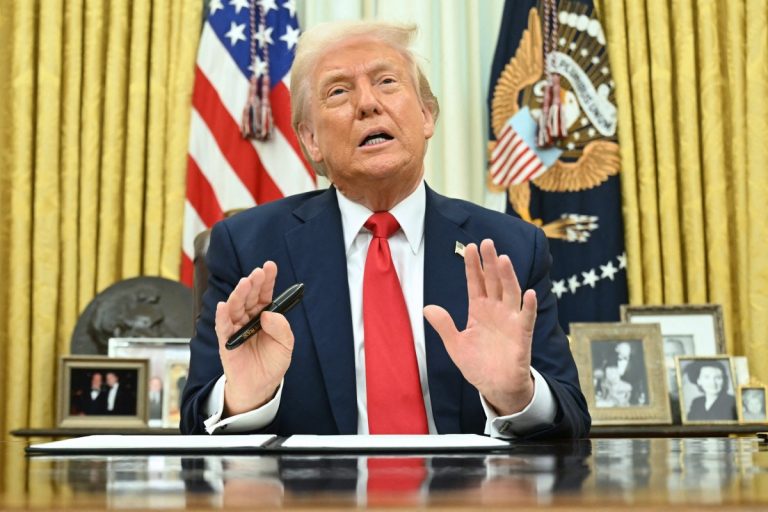
U.S. President Donald Trump is preparing to introduce a sweeping set of tariffs dubbed “Liberation Day” levies, a move expected to escalate tensions with major trading partners.
The announcement, set for Wednesday, has already rattled financial markets and drawn warnings of retaliation from key U.S. allies.
The European Union, Britain, and other global economies have signaled they are ready to respond to the new tariffs, which could target a wide range of imports. The uncertainty surrounding the exact scope of Trump’s plan has left markets on edge, with stocks in both Europe and the U.S. experiencing sharp fluctuations. Trump has indicated that the tariffs aim to prevent the U.S. from being economically exploited, but specific details remain unclear.
Reports suggest that Trump’s strategy may involve either retaliatory tariffs, a uniform 20% duty on imports, or selective measures favoring certain nations. While Trump has stated he intends to be “very kind,” economists and trade experts warn that these tariffs could have significant consequences. Critics argue that if importers pass the costs onto consumers, inflation could rise, and the economy may face an increased risk of recession. Analysts, including Moody’s Chief Economist Mark Zandi, caution that an extended trade war could trigger an economic downturn before the year ends.
International leaders have responded with concern, emphasizing that trade conflicts harm all parties involved. European Central Bank President Christine Lagarde warned of negative global repercussions, while the EU announced plans to retaliate with countermeasures by the end of April. Britain, seeking exemptions from the tariffs, has not ruled out taking action, with Prime Minister Keir Starmer stating that a trade war benefits no one. Canada and Mexico, both deeply integrated into the U.S. economy, are also weighing their responses, as their industries could be significantly impacted.
The new tariffs, set to take effect immediately, include a 25% levy on auto imports starting April 3. This follows previous duties imposed on steel, aluminum, and Chinese goods. While Trump has at times softened his stance on tariffs involving key allies, his latest move reinforces a broader shift in U.S. economic policy. Trump continues to champion tariffs as a means to revive American manufacturing, despite opposition from economists and business leaders who argue that such measures could backfire.
As tensions rise, the tariffs highlight the growing divide between the U.S. and its allies on trade, security, and economic policy. With global markets on edge and governments preparing to respond, Trump’s latest trade decision could reshape economic relations for years to come.