
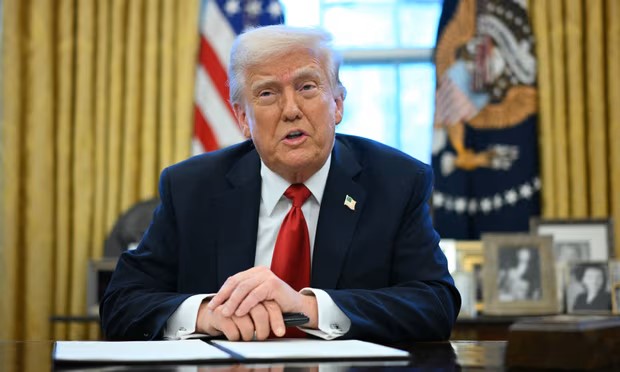
President Donald Trump has introduced a controversial bill that seeks to impose a tax on remittances sent by immigrants to their home countries, complementing his administration’s recent cuts to foreign aid and high tariffs on various nations. This legislation, encompassed within Mr. Trump’s ‘One Big, Beautiful Bill,’ allows the U.S. to claim a portion of remittance funds, a move critics argue could threaten the survival of individuals in low-income countries.
As reported by the New York Times, the potential passage of this bill would mark a significant U.S. withdrawal from Africa, following the administration’s drastic reductions in foreign assistance. Immigrants would face an additional 3.5 per cent federal tax in addition to the approximately six per cent charged by banks and remittance firms, raising concerns that the U.S. would become the most expensive country for sending money abroad.
Nigerians are projected to lose the most, with an estimated impact of $215 million, while other countries like Senegal, The Gambia, and Liberia are also expected to be adversely affected. Helen Dempster, a policy fellow at the Centre for Global Development, cautioned that the poorest individuals would bear the greatest burden if the bill were to pass, indicating that it would discourage immigration and potentially force those in the U.S. to consider self-deportation.
Analysts have characterised this legislation as an attack on the altruism of the diaspora, warning that it risks deepening hunger while exacerbating illegal migration and hindering economic growth in African nations already grappling with debt. Abike Dabiri-Erewa, chair of the Nigerians in Diaspora Commission, has not yet commented on the implications for Nigerians living in the U.S.
Furthermore, last month, Trump proposed a $1,000 stipend for migrants who voluntarily choose to return to their home countries, as part of his administration’s efforts to fulfil ambitious immigration commitments.