
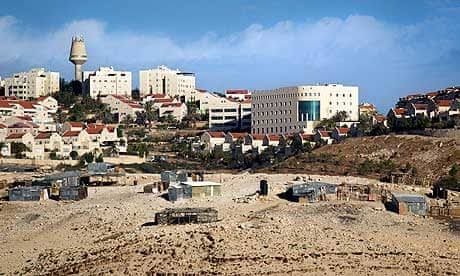
The United Kingdom has strongly objected to Israel’s decision to restart land development in the E1 zone of the occupied West Bank.
Located east of Jerusalem and previously frozen since 2021, the revived proposal includes building more than 3,000 homes.
This move, initiated by Israel’s Civil Administration planning office, would create a continuous Israeli-built corridor between Jerusalem and the Ma’ale Adumim settlement, effectively dividing Palestinian territory.
The UK government maintains that the project breaches international law and severely disrupts the prospects for a future Palestinian state.
Officials argue it breaks the continuity of Palestinian land in the West Bank and damages chances for a two-state settlement framework .
The E1 zone has long been contested due to its strategic importance.
Analysts and past UK parliamentary reviews have warned that settlement activity in this area would isolate East Jerusalem and hamper Palestinian movement between the northern and southern West Bank .
Such isolation may also further weaken any viable Palestinian economy or unified infrastructure .
This announcement follows earlier steps from the UK aimed at pressuring Israel over settlement expansion and settler violence.
Since May 2025, the UK has frozen trade discussions, announced round after round of sanctions targeting settlers and their organizations, and suspended export licences tied to military equipment .
UK ministers and legal experts have also urged broader diplomatic responses after reports of violence in Gaza and the West Bank .
France and Canada have issued joint messages with the UK condemning the plan and warning of further steps if Israel continues settlement expansion.
In parallel, the EU is assessing its own trade relationship with Israel .
The renewed focus on E1 arrives at a time when international pressure is rising across multiple fronts—legal, diplomatic, and economic—prompting Israel to reconsider actions that may further harden positions on both sides.