
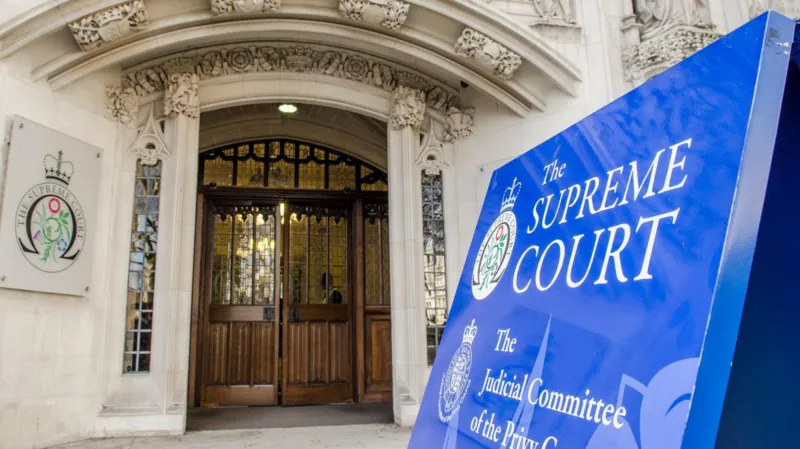
The United Kingdom’s top court is set to announce a major ruling that will determine how the term “woman” should be defined in law.
The case, which centers on the interpretation of the 2010 Equality Act, could reshape how sex-based rights are understood and enforced across the country.
The legal battle has been ongoing for years and pits the Scottish government against the campaign group For Women Scotland. At the heart of the case is whether sex in legal terms refers to a person’s biological sex at birth or their legally acquired gender through a Gender Recognition Certificate (GRC), as defined by the 2004 Gender Recognition Act.
The outcome of the case is expected to influence key areas including access to single-sex spaces, maternity policies, equal pay cases, and participation in sports. It could also shape the broader discussion around transgender rights and protections under existing equality laws.
The Scottish government maintains that people who hold a GRC have legally changed their sex for all purposes and should be treated in line with their acquired gender. Their legal team argued that this view is consistent with the language and intent of current UK law.
In contrast, For Women Scotland argues that legal recognition through a certificate should not override the biological definition of sex. The group’s legal representative told the court that the original meaning of man and woman in the Equality Act refers to biological sex, which he described as an unchangeable fact. They have expressed concern that redefining sex in law could put at risk services and protections meant for women and girls.
The case first emerged in 2018, when the Scottish Parliament introduced a bill aimed at improving gender balance on public sector boards. For Women Scotland challenged the inclusion of transgender women in the quotas set by that law, arguing it undermined the intention of ensuring female representation.
Since then, the case has moved through Scottish courts and reached the Supreme Court in London. A ruling is expected at 09:45, and it will likely have implications beyond Scotland, shaping how public institutions across England and Wales interpret the law.
The timing of the case comes during a period of intense public and political debate about gender identity and rights. Transgender advocates worry that a ruling in favor of the campaign group could limit protections and recognition for people who have transitioned. Some human rights groups have warned that such a ruling could also threaten protections for other minority groups under the Equality Act.
At the same time, many women’s rights groups insist that upholding a biological definition of sex is essential for safeguarding female-only spaces and services.
In the background, previous attempts by the Scottish Parliament to make it easier for individuals to change their legal sex have already been blocked by the UK government. Those reforms, which would have removed the requirement for a medical diagnosis in the GRC process, have since been dropped.
As the UK awaits the court’s final decision, both sides of the debate are preparing for a ruling that could shape the country’s legal and social landscape for years to come.