
Equatorial Guinea has won a long-standing territorial dispute with Gabon after the United Nations’ highest court ruled in its favour over three small islands located in the oil-rich waters of the Gulf of Guinea.
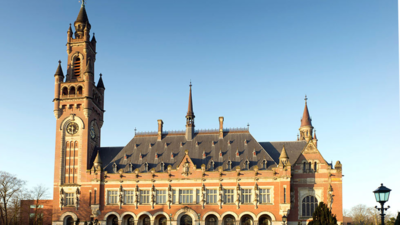
The International Court of Justice (ICJ) delivered its decision in a case that has been unresolved for over 50 years.
The dispute, dating back to the 1970s, involved three uninhabited islands—Conga, Mbanié, and Cocoteros. Although these islands are small and empty, they lie in a maritime area believed to contain large oil reserves, making them highly valuable to both countries. The court’s decision brings legal clarity to an issue that has affected relations between the two Central African neighbours for decades.
The ICJ based its judgment on a treaty signed in 1900 between France and Spain, the former colonial rulers of the two countries. According to this agreement, the islands were part of Spanish territory, and when Equatorial Guinea gained independence in 1968, it inherited control over them. Gabon had argued that a later treaty signed in 1974—known as the Bata Convention—transferred the islands to its control, but the court rejected this claim.
As part of the ruling, Gabon is now required to withdraw its troops from Mbanié Island, which is the largest of the three. Gabon had occupied the island since 1972 after it forced Equatorial Guinean troops to leave and set up a military post there. The move had led to tensions, though both countries avoided armed conflict and allowed the situation to cool over the years.
Interest in the islands rose again in the early 2000s when it became clear that the surrounding waters might hold major oil deposits. This sparked fresh negotiations, and in 2016, both countries agreed to hand the matter over to the ICJ after years of UN-backed mediation failed to produce an agreement.
Following the ruling, Gabon’s presidential office stated that the two nations would now need to sit down and work out the next steps. A senior government official noted that, despite the outcome, the countries must continue to live peacefully alongside each other and engage in direct talks to resolve any remaining issues.
Both Equatorial Guinea and Gabon are oil-producing countries, but they have seen their output decline in recent years due to limited investment, aging infrastructure, and a slowdown in new oil discoveries. The ruling could open new opportunities for Equatorial Guinea if oil is found in the contested waters, while Gabon may now have to adjust its maritime plans.
The decision marks the end of a long legal and political struggle. It also shows how international law can help settle complex border disagreements, even when natural resources are involved. With the court’s ruling final and binding, both countries are expected to begin a new phase of dialogue to strengthen peaceful ties in the region.