
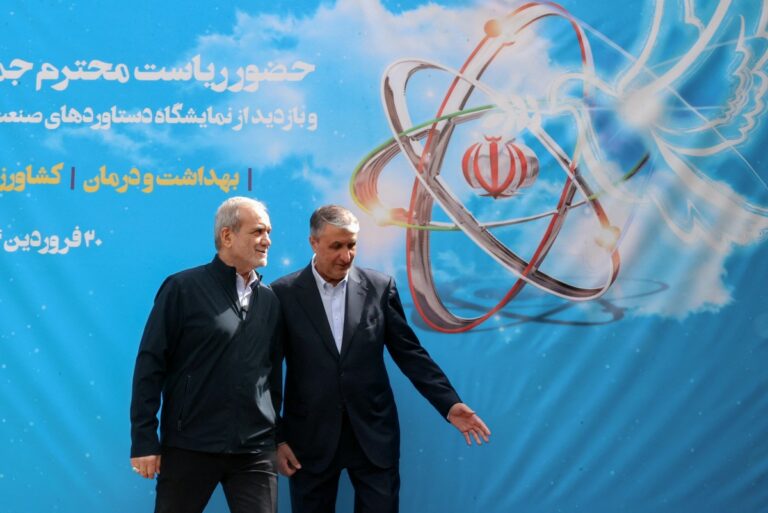
The United States and Iran have officially begun high-level nuclear talks in Muscat, Oman, in what could be a pivotal moment for international diplomacy.
These are the most significant discussions between the two countries since the 2015 Iran nuclear deal collapsed, following President Donald Trump’s withdrawal in 2018 during his first term.
Leading the negotiations are Trump’s special envoy Steve Witkoff and Iranian Foreign Minister Abbas Araghchi. While the U.S. has called for direct talks, Iran has insisted the discussions begin indirectly, with Omani Foreign Minister Badr bin Hamad Al Busaidi acting as intermediary.
Speaking aboard Air Force One, Trump reaffirmed his stance: “I want Iran to be a wonderful, great, happy country. But they can’t have a nuclear weapon.” He has made it clear that failure to reach a deal could result in military action: “If it requires military, we’re going to have military.”
Iran’s Supreme Leader’s adviser, Ali Shamkhani, said Iran is ready with “important and implementable proposals,” but warned that any progress depends on Washington showing goodwill.
The talks come amid rising tensions and warnings. Tehran has threatened to expel UN nuclear inspectors if pushed too far, which Washington says would be an “escalation.” At the same time, Iran’s nuclear stockpile is growing. A recent IAEA report said Iran holds 274.8 kg of uranium enriched to 60% — close to weapons-grade.
Trump’s team is reportedly demanding Iran fully dismantle its nuclear programme, though some U.S. officials acknowledge that compromises may be necessary to prevent further escalation.
These negotiations could mark a turning point — either toward renewed diplomacy or heightened conflict.